
Discover how to write compelling betrayal in fiction, with clear definitions, memorable quotes, and must-read book examples.
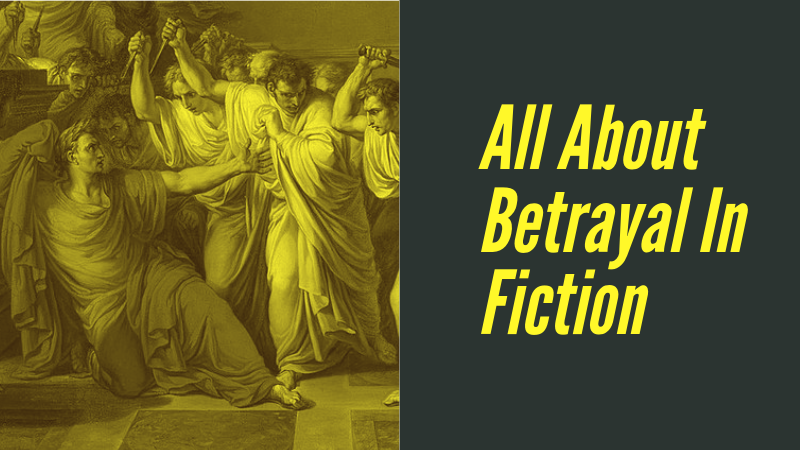
The Ides of March is upon us. The Ides, made famous by Shakespeare’s play, The Tragedy of Julius Caesar, have become famous for the betrayal of Caesar by his senators, including his friend Brutus. Caesar says: ‘Et tu, Brute? (‘You too, Brutus?’) at the moment of his assassination. The phrase is now used to show an unexpected betrayal by a friend. So, I thought this was the perfect time to write about all things betrayal in fiction.
We start by defining betrayal, then add famous quotes about it. We move on to how to write about betrayal and end with a selection of famous books that feature it.
Is there anything that hurts more than betrayal? When trust is gone, conflict is born.
What Is Betrayal?
According to Dictionary.com, it is:
1. the act of exposing or delivering someone to an enemy through treachery or disloyalty.
2. the act of disappointing a person’s trust, hopes, or expectations.
3. the act of revealing information in violation of confidence.
4. failure to keep or honour a promise, principle, cherished memory, etc..
5. an act or instance of unconsciously revealing or displaying some quality or characteristic, typically one preferably concealed.
Synonyms include:
- Treachery: The act of violating faith or confidence.
- Disloyalty: Failure to be loyal to a person or cause.
- Perfidy: Deliberate breach of faith or trust.
- Infidelity: Unfaithfulness, particularly in a romantic context.
- Violation: Breaking a promise, rule, or boundary.
- Treason: Betrayal of one’s country or sovereign.
All About Betrayal in Fiction
‘Yet each man kills the thing he loves
By each let this be heard,
Some do it with a bitter look,
Some with a flattering word,
The coward does it with a kiss,
The brave man with a sword!’
~Oscar Wilde, The Ballad of Reading Gaol
a) Betrayal Quotes
- You can accept a falling out that changes your plans, but it’s hard to accept a betrayal that changes your memories. ~Robert Breault
- We have to distrust each other. It is our only defense against betrayal. ~Tennessee Williams, Camino Real
- I agree with Dante, that the hottest places in hell are reserved for those who in a period of moral crisis maintain their neutrality. There comes a time when silence becomes betrayal. ~Martin Luther King, Jr.
- Betrayal isn’t ridiculous. It’s the reason empires fall. ~Marisha Pessl, Night Film
- Until that time, her betrayals had filled her with excitement and joy, because they opened up new paths to new adventures of betrayal. But what if the paths came to an end? One could betray one’s parents, husband, country, love, but when parents, husband, country, and love were gone – what was left to betray? ~Milan Kundera, The Unbearable Lightness of Being
- That was how dishonesty and betrayal started, not in big lies but in small secrets. ~Amy Tan, The Bonesetter’s Daughter
- Defeat I can endure with cheerfulness, my lady. But betrayal is like taking the wind from my sails, or the earth from beneath my feet. It chills my spirits like a rainy day, and all I can do is draw the curtains and cry into my pillow. ~Margaret George, Mary, Queen of Scotland and the Isles
- It is easier to forgive an enemy than to forgive a friend. ~William Blake, The Complete Poetry and Prose of William Blake
- Why shouldn’t I hate her? She did the worst thing to me that anyone can do to anyone else. Let them believe that they’re loved and wanted and then show them that it’s all a sham. ~Agatha Christie, The Mirror Crack’d from Side to Side
- First, there was trust. Then, there was betrayal. You cannot have one without the other. ~Sarah Penner, The Lost Apothecary
- I used to advertise my loyalty and I don’t believe there is a single person I loved that I didn’t eventually betray. ~Albert Camus, The Fall
- Et tu, Brute? ~William Shakespeare, The Tragedy of Julius Caesar
- I’m not really sure why. But… do you stop loving someone just because they betray you? I don’t think so. That’s what makes the betrayal hurt so much – pain, frustration, anger… and I still loved her. I still do. ~Brandon Sanderson, Mistborn: The Final Empire
- Betrayal is the only truth that sticks. ~Arthur Miller, After the Fall
- Worse, the deadly accuracy of filial faultfinding is facilitated by access, by trust, by willing disclosure, and so constitutes a double betrayal. ~Lionel Shriver, We Need to Talk About Kevin
- Do you know what love is? I’ll tell you: it is whatever you can still betray. ~John le Carré, The Looking Glass War
- Love is understood, in a historical way, as one of the great human vocations – but its counterspell has always been infidelity. This terrible, terrible betrayal that can tear apart not only another person, not only oneself, but whole families. ~Junot Diaz, The Atlantic
- Freedom is fragile and must be protected. To sacrifice it, even as a temporary measure, is to betray it. ~Germaine Greer, The Female Eunuch
- As they spoke, the only thing I could think about was that scene from Julius Caesar where Brutus stabs him in the back. Et tu, Eric? ~Nicholas Sparks, A Walk to Remember
- Strange, how being left out of a secret always feels like a betrayal of trust. ~Robin Hobb, Golden Fool


b) How To Write About Betrayal In Fiction
Betrayal is the violation of trust and confidence involving deceptive and disloyal behaviour by someone close to you. Betrayal breaks us. It affects us by making us rethink our perception of reality, and our outlook on life. We don’t know who to trust. It makes us second guess every decision, and changes our memories and our sense of self. It is a brilliant tool for writers when they plot their novels. It can be used to change a character or the entire arc of a story.
Tips for Setting Up Powerful Betrayals
- The Set Up: Set up the betrayal in a way that isn’t obvious, by following the points below.
- Make Your Reader Care: Readers must be invested in your characters. If the reader doesn’t care about the protagonist or the betrayer, they won’t feel anything when the big deception happens. As a literary device: ‘The protagonist exists as a sympathetic device to drive a story… We need somebody to empathise with in a story – and the protagonist is usually the literary device that facilitates this.’ As a literary device: ‘The antagonist exists to put obstacles in your protagonist’s path. They are there to create conflict. Without conflict, there is no plot… Readers call these characters villains or opposition characters, but they need not be evil or even bad people. If the roles were reversed, the protagonist could become the antagonist.’ As a writer, you can make your readers care about both of them.
- Build the Bond: Betrayal requires a pre-existing, significant relationship where trust exists. The closer the characters are, the more the betrayal hurts. These characters must spend time together, building memories, and forming bonds. The hero must rely on the betrayer for something important like love, acceptance, or friendship.
- Choose The Best Betrayer: Pick one of your protagonist’s friends or love interests. What are the worst betrayals these characters could perform? Who will have the most impact on the main character? Let them do it – and make it worth it.
- Establish Motivation: Ensure the betrayer has a compelling reason—fear, desperation, survival, greed, power, revenge, opposing beliefs—rather than acting for no reason. Revenge is the strongest motivation for a betrayer. They want justice, whatever that may be in their eyes. This makes them a formidable enemy.
- Use Foreshadowing: You can use your characters’ actions and abilities, the setting, motifs, dialogue, tone, weather, viewpoint – including unreliable narrators, sounds, smells, and tastes to foreshadow. Body language is also a good way to show the real character. Great foreshadowing causes the reader to say, ‘I should have realised this would happen.’
- Use Point Of View (POV) – Tell the story in a viewpoint that makes it impossible for the reader to see what’s happening behind the scenes. Or you can use an unreliable narrator who is in denial and they don’t tell the reader the whole story. In Gone Girl, the unreliable narrator viewpoint leads readers into twists and turns and betrayals they never see coming.
- Internal & External Conflict: Show the emotional turmoil of both the betrayer and the betrayed, highlighting the intense, personal pain of the event. Show the destruction of relationships. Show the external turmoil by their actions – they may cry, rage, withdraw, leave, or lash out. Betrayal may even lead to murder.
- The Realisation: Create a shocking moment when the hero realises they have been deceived. Their world has turned upside down. They have been destroyed emotionally and their viewpoint is transformed. It’s often messy and scary. They should be taken by surprise for maximum effect on the reader. Emotions could include shock, rage, sorrow, confusion, and humiliation. They also feel intense anger, helplessness, grief, paranoia, a loss of self-worth, and a loss of trust in others. They want to know why it happened.
- The New Normal: The world has changed forever. The character must find a way to deal with what has happened. This will set the story on a new trajectory, create more conflict, and motivate them to realising their story goal.
Types Of Betrayers
- The Remorseless/Narcissistic Betrayer: This entity acts with no remorse or regret, and they are entitled and lack empathy. (See The Girlfriend by Michelle Frances below.)
- The Double Agent: This character appears loyal, kind, and trustworthy, often functioning as a close ally of the protagonist. They are masters of deception. They are the trusted companion who is actually the antagonist, or who has been planted by the antagonist. This shatters the betrayed character. To complicate things, the betrayer may have developed genuine feelings for the protagonist, making the final betrayal painful for both of them. (See The Spy Who Came in from the Cold
by John le Carré below.)
- The Jealous Friend: This character betrays out of jealousy, envy, or insecurity. They feel inferior to the protagonist and bring them down to satisfy their own ego. They resent being constantly in the shadow of the hero. (See The Count of Monte Cristo
by Alexandre Dumas below.)
- The Noble Traitor: A guardian figure (holding a high position of trust) sacrifices their honour, reputation, and sometimes their sanity, by betraying a government, kingdom, or person to prevent a greater evil. They see themselves as a necessary evil.
- The Reluctant Betrayer: A character turns on the hero, not out of animosity, but because the antagonist threatens to kill their family or destroy their livelihood. This forces the betrayal and leaves them guilt-ridden and emotionally damaged. (See Casino Royale by Ian Fleming below.)
- The False Prophecy: The hero acts on a holy prophecy, only to realise their mentors or leaders have used them as a pawn to win power.
- The Self-Betrayer: This character betrays their own morals, values, and safety. This type of betrayal often stems from fear of disapproval and a longing for acceptance. (See The Remains of the Day
by Kazuo Ishiguro below.)
- The Accidental Assassin: Two characters fall in love or become close allies. They are unaware, or may be unaware, they stand for opposing sides of a conflict. Authority figures on both sides force them to kill each other, turning the relationship into a fight for survival. (See Mr. & Mrs. Smith or Killing Eve.)
- The Emotional or Physical Cheater: They share intimate thoughts and feelings with someone else or engage in physical intimacy with someone else. (See Medea by Euripides below.)
c) Novels About Betrayal
- The End of the Affair by Graham Greene – After Sarah ends their affair, her jealous ex-lover Maurice realises that his major rival for her love is God.
- The Girlfriend by Michelle Frances – is a gripping and chilling psychological thriller, based on an unforgiveable lie, and the price paid when betrayal is exposed. The girlfriend in the title, Cherry, is highly manipulative, calculating, and self-absorbed. She is a psychopath.
- The Remains of the Day
- The Man Who Didn’t Call by Rosie Walsh – is a suspenseful mystery that taps into one of the most painful forms of modern betrayal: ghosting.
- Great Expectations
by Charles Dickens – Pip is an orphan given the chance to become a gentleman of wealth. But as he rises in society, he starts to betray his origins and the people who truly care for him.
- Medea by Euripides – Medea is betrayed and abandoned by her husband, Jason for a younger woman. Wronged and volatile, Medea is eventually driven to killing her own children.
- Fourth Wing by Rebecca Yarros – is a high-stakes romantasy with a ‘trust-no-one’ atmosphere. Violet is forced by her commanding general mother into the brutal Basgiath War College to become a dragon rider. Betrayal is everywhere and she must either graduate or die.
- The Spy Who Came in from the Cold
- Gone Girl by Gillian Flynn – is a chilling portrayal of marital betrayal and deception.
- The Kite Runner by Khaled Hosseini – Amir, a privileged Pashtun boy from Kabul, is haunted by his betrayal of his loyal Hazara friend, Hassan. The story is set against the backdrop of a war-torn Afghanistan.
- The Count of Monte Cristo
- A Court of Mist and Fury by Sarah J. Maas – Feyre returns to the Spring Court pretending to still love Tamlin. But she is there to spy on him and destroy his regime from within, demonstrating a complex, tactical betrayal.
- Casino Royale by Ian Fleming – Vesper acts as a British agent working with James Bond but is secretly being blackmailed by Soviet intelligence because her lover is captured. She betrays Bond to the villains.
Click her for more books on betrayal.
The Last Word
I hope this guide has given you a complete look at betrayal in fiction. We began with a clear definition, explored powerful quotes, examined how to write betrayal and types of betrayers effectively, and finished with well-known books that use it well. It’s a powerful storytelling device, one that can add tension, depth, and emotional impact to your novels.
Source for image: The Death of Julius Caesar, Vincenzo Camuccini, Public domain, via Wikimedia Commons

by Amanda Patterson
© Amanda Patterson
More posts from Amanda:
- The Best Priest Detectives In Fiction
- What Is Slipstream Fiction?
- What Is Imagery & How Do You Use It In Fiction Writing?
- How To Deal With A Writer’s Inner Critic
- What Is Exposition In A Story?
- Why You Don’t Need To Put Everything In Your Book
- How To Write Hardboiled Fiction
- 12 Types Of Memoirs – Which One Is Yours?
- How Many Suspects Do You Need In A Crime Novel?
Top Tip: Sign up for our free daily writing links.
3 thoughts on “Betrayal in Fiction: How to Write Powerful, Unforgettable Twists”
So many forms of betrayal, I am afraid to step out the door.
This will be a great read for my students as we start reading JULIUS CAESAR and getting a better idea of betrayal!
We hope it helps. Thank you for the feedback.
Comments are closed.