
Tension is essential in storytelling. Without it, readers lose interest. Every writer needs to know how to create and build tension in their story.
No tension, no story. It’s that simple, and that hard. Tension is an important tool in our writer’s kit. It is often mistaken for suspense. The two are related but not the same; we’ll get to suspense later. First, let’s look at the nature of tension.
What Exactly Is Tension In Storytelling?
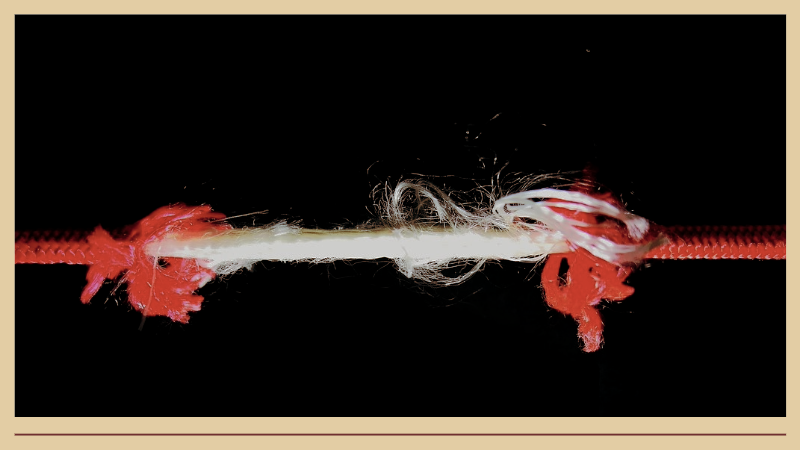
Imagine there’s an elastic rope between you, the writer, and your readers. You can only feel that attachment if there’s a certain pull on the rope. That’s tension. It’s what makes readers go along with the author.
Tension is tangible in that every reader can feel it, and it’s not limited to stories. It is the physical sensation readers experience as they anticipate the outcome of an event or conflict, real or fictional. It makes them curious about the story and anxious about what happens to a character. And it makes readers anticipate an ending.
Let’s look at Shakespeare’s Romeo and Juliet. It’s because of tension that readers can feel Romeo’s happiness when he first sets eyes on Juliet. Readers can feel Romeo’s agony when he sees Juliet lying there, lifeless. And why readers almost cry at the end of the play. How does Shakespeare do that? Please read on.
How Does Tension Work?
To understand this, we need to go into neuroscience (it won’t be too deep). Our brain is like a supercomputer predicting possible outcomes of whatever situation we’re in. It’s a survival technique that helped us way back when it was good to know what options you had when facing an angry mammoth (or any other threat).
What’s important to know is that this prediction engine thrives when we lack information. We can see the mammoth, yes, but we don’t know how it will attack. Will it just run us over, or will it charge with its tusks? Would it back down from an attack if faced with lots of people? Would it shy away if those people made a lot of noise?
You can see, our brain loves making up all kinds of scenarios. We do it all the time! If a writer is very skilled, these situations can be larger than life. Our brain accepts these fictional dilemmas and lets our body feel real excitement, fear, thrill, even though it’s all fiction. But that is tension!
It’s this function of the brain that writers use when telling a story. Readers don’t even know what’s happening. They just know they’re hooked.
How Can Writers Create Tension?
That’s easy! You need to feed the readers’ brains with a tiny bit of real information, but a very big lack of information. That sounds like a contradiction, right? Well, it’s all in the dosage.
Back to our example from Shakespeare. The playwright tells us about the family feud between the Montagues and Capulets before the love story even begins. Our brains immediately start predicting. We anticipate an aggressive conflict simply because the feud is mentioned. Then, Shakespeare uses the opposite of aggression to feed us the seed of a love story. That’s when our brains really take off.
What Shakespeare did was to give a little information to create an interesting situation. Then he used the power of opposites (see below) to augment the conflict. Tension, right?
Tension can take work on four levels.
The Four Types Of Tension In Storytelling
Let’s go back to the elastic rope. That rope must be stretched and released, but only a little bit, just enough to give the reader time to breathe. Then it is stretched again and released and stretched. This can happen on several levels.
1. Tension Through Story Structure
This basic tug-and-pull mechanism in a story works through action and reaction scenes (also called scenes and sequels). The action scenes pull the rope very tight, and just before the reader thinks it’s going to all fall apart, the writer releases part of the tension. That happens in a reaction scene (here’s more info about scenes and sequels).
On the plot level, this tug-and-pull mechanism means that conflict must be paired with resolution. The final resolution is the ending of your story, of course. But before that, writers must show a lot of smaller conflicts that are resolved along the way, just to keep their readers’ prediction engines happy. Then, they should give a glimpse of what a possible resolution of the big underlying conflict can be. This foreshadowing can turn out to be a red herring or a plot twist, and the actual ending may be something altogether different.
Try to build your own story on a strong foundation of tension. This means the premise of the story should already include tension (remember Romeo & Juliet?). Don’t worry if this is hard at the beginning. It might only become clear to you when revising your first draft – that’s because you need to know your story and your characters inside out when you focus on tension.
2. Tension Through Opposites
Our example from Shakespeare has already shown that opposites are a great device to create tension right from the start. Basically, it means you need to set up lots of sources of conflict.
Conflict using several characters is a natural in storytelling. Remember to pit your main character against an antagonist with opposing story goals.
A famous example would be Sherlock Holmes and Professor Moriarty. Holmes wants to solve his case and help his client, while Moriarty wants to kill Holmes. Conan Doyle’s tension is successful because both men have a similar IQ, and they both love a good puzzle. They could actually be good friends – if it weren’t for their opposing morals. Holmes defends the law, while Moriarty is selfish.
You can also pit characters against the setting. This happens when the main characters can’t set out to save the world because a hurricane is forcing everyone to stay inside. Or because they’re on a distant planet.
Setting can take your heroes outside their comfort zone. If the environment is opposing them, your readers will wonder how these obstacles can be overcome.
3. External Vs. Internal Tension
External tension comes from your main character’s story goals, values, hindrances, and enemies. This means you must design your characters as rounded characters to achieve external tension. Give them a full biography. And then throw a lot of obstacles and conflicts at them.
A classic example is Tolkien’s The Lord Of The Rings, where Frodo is on a quest to destroy the ring and save the world. Everything he encounters in his travels contributes to external tension.
Internal tension relies on the psychological profile you’ve given your characters. Your characters need failures to cope with and setbacks to overcome, so that there’s personal development. Also, remember to include personal strengths that act as tragic flaws. That internal tension makes your characters relatable and almost magnetic to the readers.
In The Lord Of The Rings, Frodo’s flaw is his naivety and indecisiveness. We often see him doubting and hesitating. His mercy and naivety are why he’s unable to kill or abandon Gollum, therefore endangering the mission several times.
4. Time Constraints & Raising The Stakes
Both are plot devices that can increase tension considerably.
- Time constraints are an easy way to structure your story. Deadlines must be met; your readers will anticipate how your characters will accomplish this. That anticipation alone creates external tension.
- Raising the stakes also creates tension because you either increase the conflict or delve deeper into your characters’ psyche by explaining why the story goal becomes more important to them. Raising the stakes can bring either external or internal tension.
Tension Vs. Suspense
A lot of people mistake tension with suspense. Some languages only have one word for both (like German, ‘Spannung’). I do think, however, it’s worthwhile to note the difference.
- Tension is created when readers anticipate the outcome of a situation. They do that because of an underlying lack of information. Hitchcock used an example about a bomb under a table. Tension would mean that readers know that there’s a bomb in the room. Readers would then watch a character look for that bomb. Readers and characters have the same lack of information.
- Suspense is the opposite. Alfred Hitchcock once said, ‘Suspense is when the spectator knows more than the characters.’ Suspense would mean that readers have more information than the characters. They would know exactly where the bomb is and that it is about to go off. The suspense lies in watching the characters search for the bomb, not knowing if it can be defused in time.
The Last Word
In the beginning, I said that there’s no story without tension. Writers include some tension simply by writing in action and reaction scenes. Most people don’t need to worry about this; they fall into this rhythm naturally because they soaked it up when they first became readers.
But now you know there’s more to it, right? Please explore all levels of tension, and maybe even suspense. It’s a lot of fun! When all of them come together in storytelling, your readers won’t be able to put your story down!
Source for image: Pixabay

By Susanne Bennett. Susanne is a German-American writer who is a journalist by trade and a writer by heart. After years of working at German public radio and an online news portal, she has decided to accept challenges by Deadlines for Writers. Currently she is writing her first novel with them. She is known for overweight purses and carrying a novel everywhere. Follow her on Facebook.
More Posts From Susanne:
- 7 Benefits Of Keeping A Diary – For Writers
- 7 Gripping Dystopian Plot Ideas For Writers
- Poets On Writing Poetry: Insights & Inspiration
- Poetry Made Easy: How To Read & Interpret Poems
- What Writers Can Learn From Trashy Novels
- 10 Weird Things Writers Do
- Weird Habits Of Famous Writers
- What Is Blackout Poetry & How Do I Write It?
- 6 Lessons From Lord Byron – How To Make Others Swoon With Words
- How To Write A Cozy Mystery
Top Tip: Sign up for our free daily writing links.