

Learn timeless insights from poets on the art of writing poetry. Explore what poets reveal about the craft and apply it to your own work.
Poets On Writing Poetry: Insights & Inspiration
What exactly is poetry, anyway? We all have an inkling. But do we know? What’s a poet’s reason for writing? And what does poetry do for them? Let’s find out together – by looking at the poetry of some modern poets. Here are some really poetic answers.
What Is Poetry?
That is a very big question. It might even be impossible to answer. So, let’s rephrase and ask: ‘What is poetry to these poets?’
The Spanish poet Pablo Neruda (1904-1973) describes poetry as something almost supernatural. Poetry summoned him, and Pablo Neruda (1904-1973) answered, as he writes in his poem ‘Poetry’ (1964):
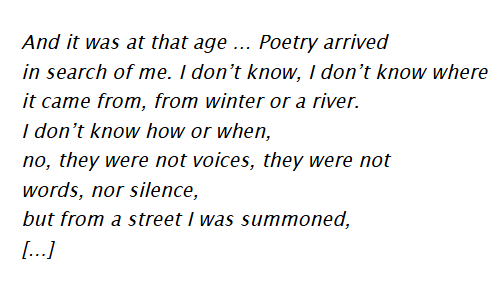
This is almost a religious experience! Other poets have very different answers, of course.
The American poet Archibald MacLeish (1892-1982) has another interesting approach. His thoughts connect to the aesthetic concept of the ‘sublime.’
The sublime, in a nutshell, is the idea that beauty (in art or in nature) can be so overwhelming that it connects us to a higher principle; a greatness so awe-inspiring that we may have a near-religious experience.
In his poem ‘Ars Poetica’ (1926), MacLeish describes poems as ‘wordless’ and ‘motionless.’ What he means is that poetry should be awe-inspiring, as natural phenomena often are. But above all, a poem should not contain meaning but be an entity by itself.
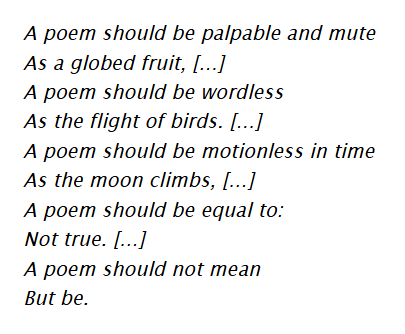
Charles Ghigna (1946- ) is a contemporary American poet known for his children’s books (he’s also known as ‘Father Goose’), and he has found a simpler way to describe his approach to poetry. His poem ‘What’s a poem’ (2023) almost sounds like a recipe, listing all the ingredients:
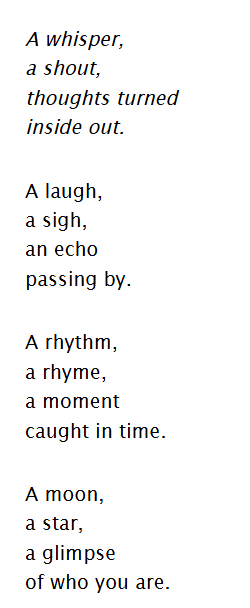
So now that we know what should go in a poem, we need to find out how to put it all together. How can we make it work?
Edward Lueders (1923- ) has an answer for that. Here’s a snippet from his poem ‘Your Poem, Man…’:
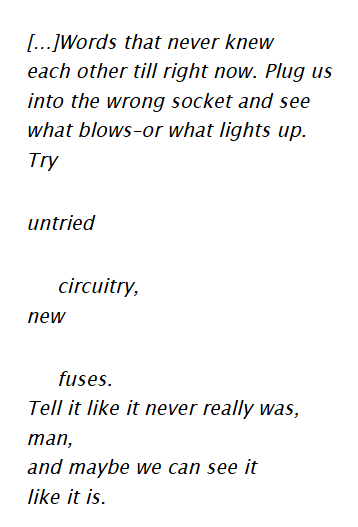
That gives you the creative freedom to string those words together in whatever way you like. See what lights up! You are allowed (maybe required?) to experiment. Nothing can go wrong.
Why Write Poetry?
Charles Ghigna’s poem already hints at the big why. A poet should write poetry to show ‘a glimpse of who you are.’ That would make poetry a great tool, with the purpose of unravelling our true personality.
For Poet Tom Zart, poetry can do even more. It is not just something that helps us understand; it also gives active guidance. This is an excerpt from Zart’s ‘The Power Of Poetry’:
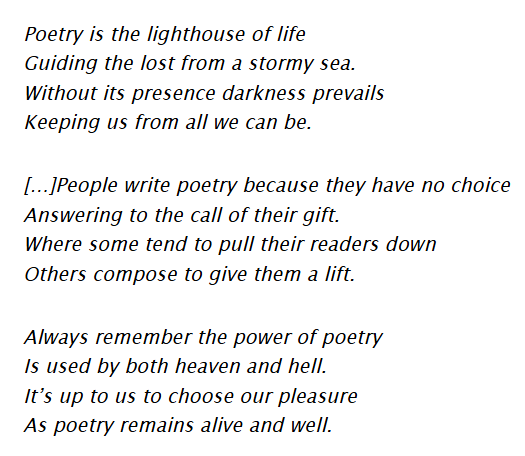
The last stanza is especially interesting. It points out that poetry is a tool so powerful that good and evil fight over it. Poetry can be used for propaganda because, in the end, poetry is just a technique.
How To Write Poetry
The answer to this question is very hard. There is no right or wrong in poetry. There are so many styles, so many forms, so many languages to choose from! Many poets have tried to define how to write poetry. Personally, I believe poets must find their individual way.
The Chilean poet Nicanor Parra (1914-2018) despised poems and poets whenever they were too pompous. In this light, he wrote this poem called ‘Young Poets’ (1954).

I think his advice to young poets is wonderful! The last line is something every writer needs to live up to: ‘You have to improve the blank page.’ That is a call to action, right? It’s also comforting because a blank can only be improved; it can never be made worse.
What’s In It For The Poet?
Pablo Neruda is very clear about what poetry does for him. The experience of getting in touch with poetry is exhilarating, almost mind-blowing. It brings insight into the workings of the universe. Again, an excerpt from ‘Poetry’ (1964):
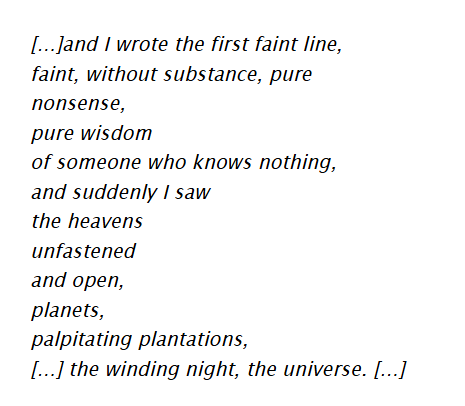
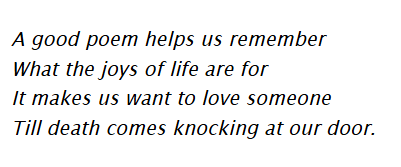
Tom Zart gives writing poetry another purpose. In ‘A Good Poem’ (2025), Zart hints at poetry’s origins as a mnemonic device. Once used to help carry historical information from one generation to the next, it also helps us connect to our purpose in life.
Are You A Poet?
If you ever ask yourself if you are a poet, then I recommend reading Thomas Newton’s poem, ‘I AM A POET’ (2003). In this poem, he debunks all the myths of what a poet should be: a homosexual, a drug addict, suicidal, an atheist, or a pacifist.
Don’t worry, if you’re not any of those, you’re in good company. As Thomas Newton, you are simply a ‘conservative poet’ – but a poet, nonetheless.
The Last Word
You’ve discovered enduring insights from poets on the art of writing poetry. Learned what they reveal about the craft and how to apply it to your own work. Whether you’re starting out or refining your voice, remember: poetry is as much about reading and listening as it is about writing. Take what resonates, experiment with confidence, and let these poets inspire you as you shape your work—one line at a time.
Further Reading:
- Poems On Poems
- 15 Quotes on Writing Poems and Craft
- 10 New Poems About Writing Poetry
- 33 Quotes By Poets On Poetry
- Poetry 101: What Is A Poem?

By Susanne Bennett. Susanne is a German-American writer who is a journalist by trade and a writer by heart. After years of working at German public radio and an online news portal, she has decided to accept challenges by Deadlines for Writers. Currently she is writing her first novel with them. She is known for overweight purses and carrying a novel everywhere. Follow her on Facebook.
More Posts From Susanne:
- Poetry Made Easy: How To Read & Interpret Poems
- What Writers Can Learn From Trashy Novels
- 10 Weird Things Writers Do
- Weird Habits Of Famous Writers
- What Is Blackout Poetry & How Do I Write It?
- 6 Lessons From Lord Byron – How To Make Others Swoon With Words
- How To Write A Cozy Mystery
- The Writers Write Book Reading Challenge – 3
- 20 Weird Things Readers Do
- The 5 Most Common Themes In Literature
Top Tip: Sign up for our free daily writing links.
2 thoughts on “Poets On Writing Poetry: Insights & Inspiration”
What an inspiring read! And a reminder of what poetry was, is, and can be.
Hi Thia! So glad you like my post. Hope it gives you lots of inspiration for your own poetry.
Comments are closed.