
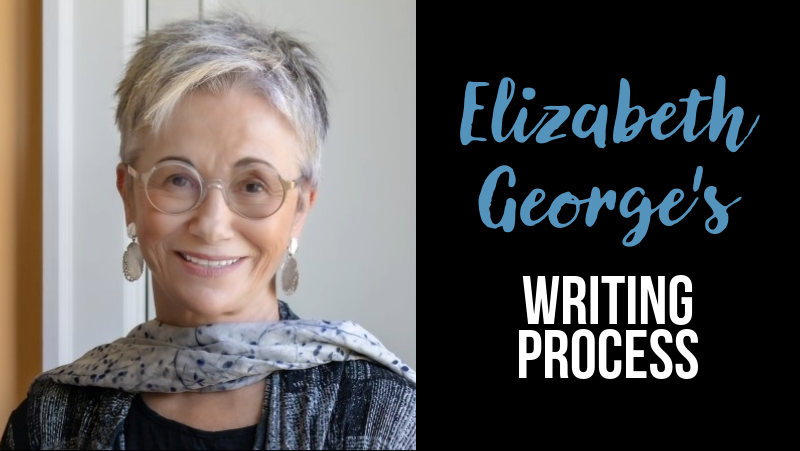
We’re writing about the acclaimed police procedural writer, Elizabeth George. In this post, we explore Elizabeth George’s writing process.
Elizabeth George was born on 26 February 1949. She is an American author of police procedural novels set in Great Britain. She is the New York Times and internationally bestselling author of 22 novels featuring Detective Inspector Thomas Lynley and his unconventional partner, Detective Sergeant Barbara Havers. She started writing The Inspector Lynley series in 1988 after the publication of A Great Deliverance
She is also the author of a young adult series of suspense novels set on the island where she lives in the state of Washington, namely The Abandonment of Hannah Armstrong Series. The books fall into the young adult, paranormal thriller genre.
She is the recipient of the Anthony Award, the Agatha Award, France’s Grand Prix di Literatture Policiere, and Germany’s MIMI. She has twice been nominated for an Edgar Award, and she is the recipient of an honorary doctorate of humane letters from California State University Fullerton, and an honorary MFA from Northwest Institute of Language Arts (Whidbey Island MFA Program).
She has also written the longtime bestselling creative writing book, Write Away, and more recently, Mastering the Process: From Idea to Novel. She has edited two volumes of short stories, and is the executive chair of the Elizabeth George Foundation.
You can visit her website at www.elizabethgeorgeonline.com and follow her on Facebook.
In this post we look at the famous writer’s writing process.
Elizabeth George’s Writing Process
- Write Anywhere: “I write wherever I happen to be. When I’m on a book tour, I’ve got my computer with me and I write in whatever hotel room I happen to be in … or I write on the airplane … or I write in the lounge as I’m waiting for the airplane. When I am at home, I work in my study.”
- Write Five Pages A Day: “When I’m working on a novel, I keep a regular schedule, just as if it were a job. I get up early in the morning and do my writing for the day as soon as I’ve worked out. I write five pages a day, five days a week, when I’m working on the rough draft of a novel, regardless of where I am.”
- Develop A Writing Process: “I developed a complicated process to demystify writing. I do think everybody needs to develop a process that works for them that will demystify or ‘deterrify’ the process. If I were to begin a novel thinking that somehow I was going to have to create on a blank computer screen a 600-page rough draft, it would be very frightening, and I’d probably never be able to do it. So I created a structured, step-by-step approach to writing that appeals to my organizational side, the left side of my brain, and as I apply myself to each step in that structured approach, I do it in such a way that it triggers the right side, the creative side, of my brain.”
- Find A Way To Create Characters: “When I’m creating my characters, I do it in a present tense, right brain, stream-of-consciousness fashion, throwing onto the page everything that pops into my mind until I feel I am heading in the right direction with that character. It’s very much a physical feeling. When it comes to writing, I never listen to my mind; I always listen to my body. I’ve learned to trust that feeling right in my solar plexus.”
- Know Your Characters: “When I begin a mystery, I know the killer, the victim, and the motive. From that, I develop what I call an expanded story idea. It answers all the questions of who, what, when, where, and why. Then I develop a generic list of characters of everyone who is in any way involved in the story—for example: the killer; victim; detective; suspect one, the milkman; suspect two, the postman; etc. First, I give them generic titles, then I name the characters, and then I create them.”
- Concentrate On The Killer: “Only one character is created to do something specific—and that is the killer. I have no idea what the rest of the characters in the book are going to do until I actually start creating them. As I create them, they begin revealing to me who they are, how they fit into the story, and they give me an idea of what the theme is going to be and what the sub-plots will be, as well.”
- Follow The Plot: “I have my character analyses to remind myself who these people are, what is going on with them and the things that trigger them. I have my running plot outline that shows me essentially what the next scene is going to be. I have my step outline that shows me the causal relationships between the scenes. So when I’m actually sitting in front of the computer, doing the rough draft, I know where the scene is going, I know who is in it, I know what point I’m trying to make, I know where I’m heading … and that allows me to experience the beauty of manipulating language in writing, which is what I really love to do.”
Now that we understand more of Elizabeth George’s writing process, let’s look at some of her general advice.
Elizabeth George’s Additional Tips For Writers
- Learn The Craft: “It’s important for beginning writers to learn the craft, the basics, of writing. You can’t teach somebody to be a creative artist, to have talent or passion, but you can teach somebody craft. Whether they can apply it in an artistic fashion, well, that’s in the hands of the gods. But they can certainly learn what the craft of writing is.”
- Dismiss Your Inner Critic: “Sometimes it is all about dismissing the committee in your head that might be telling you that you’re no good, that you don’t have any ideas, that you’re not creative. They might be your parents, your high school teachers, the person who wouldn’t go to the prom with you. You have to remember that they are part of the past, and that they don’t determine your future.”
- Know Your Settings: “I never write about a place I haven’t been to. I make sure that if there is any description in my novels, I have actually been there and walked in that place.”
- Difficult Days: “That’s not to say that I haven’t had difficult days writing, because I have—days where I might spend eight hours and be stumped.”
- Love The Craft: “And writing has to be important to you. It comes down to what I call ‘suit up and show up.’ … A lot of writing is simply showing up and doing the work day after day.”
Source for quotes: Elizabeth George’s Online Interview With The Writer Magazine
Source for image: Viking Penguin Books / Photo credit: Jennifer Adams

If you enjoyed this post, you will love:
- Jules Verne’s Writing Process
- Anton Chekhov’s 6 Rules For Writing Fiction
- Edith Wharton On Writing Fiction
- Elizabeth Strout’s Writing Process
- Harlan Coben On Writing Suspense
- Brandon Sanderson’s 3 Rules For Magic
- 10 Bits Of Writing Advice From Colson Whitehead
- 9 Bits Of Writing Advice From Naomi Alderman
- 9 Bits Of Writing Advice From Guillermo del Toro
- Writing Advice From The World’s Most Famous Authors
Top Tip: Find out more about our workbooks and online courses in our shop.