
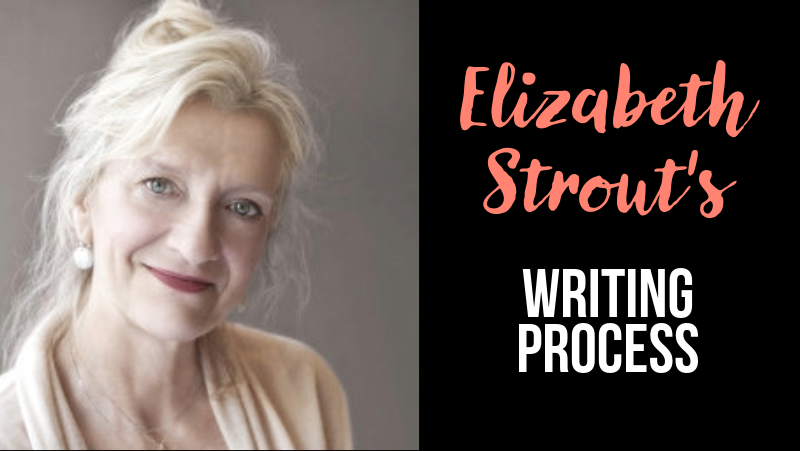
We’re writing about the award-winning author, Elizabeth Strout. In this post, we explore Elizabeth Strout’s writing process.
Elizabeth Strout was born on the 6th of January 1956. She was raised in Maine, which served as inspiration for her writing. The fictional “Shirley Falls, Maine” is the setting of four of her ten novels.
She is a #1 New York Times bestselling American author of literary fiction who won the Pulitzer Prize for Fiction for Olive Kitteridge
She is also the author of Tell Me Everything, an Oprah’s Book Club Pick; Lucy by the Sea; Oh William!, which was shortlisted for the Booker Prize; Olive, Again; Anything Is Possible, winner of the Story Prize; My Name Is Lucy Barton; The Burgess Boys; Abide with Me; and Amy and Isabelle, winner of the Los Angeles Times Art Seidenbaum Award for First Fiction and the Chicago Tribune Heartland Prize. She has also been a finalist for the PEN/Faulkner Award and the Orange Prize in London.
The Things We Never Say is coming out in 2026.
In this post, we look at her approach to writing – where she writes, how she writes, and for whom she writes. If you want to follow any of her writing processes, we’ve listed them here for you.
Elizabeth Strout’s Writing Process
1. Write In Scenes
‘I never write anything from beginning to end, not even a short story. Years ago I learned to write in scenes. When I sit down to go to the page I use whatever is most pressing in me and transpose that emotion into a character, not the factual circumstance, but the emotion of it. That way I can get a scene with what I call a ‘heartbeat’ to it. If a scene does not have a heartbeat, it gets tossed onto the floor. After a while the scenes with heartbeats begin to form a kind of story – this is why I never worry about plot. And at some point I then have to decide how to start the story and pull it tight through the various scenes.’ (Women’s Prize For fiction)
2. Write Anywhere – But Preferably At Home
‘I have always been able to write anywhere: I have written scenes on the subway, or a city bus, or in a crowded coffee shop. But my favourite place to write is at home, and this has always been true.’ (Guardian Books)
‘Sometimes I will move to the couch, which looks out at New York’s East River, and write from there. Then I will walk around the apartment talking to myself, and it is always about the work. So I move about, rather happily, until I begin to see enough scenes that will make a book or a story. This period may last for a year or more, and then I have to get down to writing the book.’ (Guardian Books)
3. Write In The Morning
‘These days I write first thing in the morning after having breakfast with my husband; my writing day starts as soon as he leaves the apartment, which is usually right after breakfast. Then I clear the table and sit down to work.’ (Guardian Books)
4. Start By Writing By Hand
‘I write mostly by hand, transcribing it on a computer when I can no longer read my writing, when I have made too many marks on the paper to be able to see the scene I am trying to write.’ (Guardian Books)
5. Write For A Patient Reader
‘I always imagine an ideal reader: someone who is patient, but not too patient; someone who needs the book and wants to read it, but may not read it if I do not write it honestly. For me, it is a dance with the reader.’ (Guardian Books)
6. Be Alone In Your Head
‘I don’t listen to any music, as I have heard other writers do. But I don’t need complete silence around me. I just need the sense of being alone in my head. This is harder to achieve than it sounds, and is why the anonymity of a subway has sometimes worked for me. And it is why I like being home alone the best.’ (Guardian Books)
Follow Elizabeth Strout on Instagram.
Source for image: Penguin Random House

If you enjoyed this post, you will love:
- Harlan Coben On Writing Suspense
- Brandon Sanderson’s 3 Rules For Magic
- 10 Bits Of Writing Advice From Colson Whitehead
- 9 Bits Of Writing Advice From Naomi Alderman
- 9 Bits Of Writing Advice From Guillermo del Toro
- Douglas Adams On The Difficulties Of Writing
- 6 Bits Of Writing Advice From Richard Osman
- 5 Bits Of Writing Advice From Kathy Reichs
- Jennifer McMahon’s Top Writing Tips
- Writing Advice From The World’s Most Famous Authors
Top Tip: Find out more about our workbooks and online courses in our shop.