

Learn how to write a query letter that gets attention. Follow 12 easy steps to pitch your book clearly, professionally, and confidently, with three examples.
Thank you for the positive feedback on my post How To Write A One-Page Synopsis (With Examples). Of course, it’s just as important to write a great query letter to accompany that synopsis.
Why Do You Need A Query Letter?
These letters are important if you’re trying to break into a major market and the publisher does not accept unsolicited manuscripts. They are the gateway to your goal. Try to make a good impression. Sell your story, and then yourself.
I have put together what I think is essential to include in your query letter in the template below.
How To Write A Query Letter In 12 Easy Steps – Template
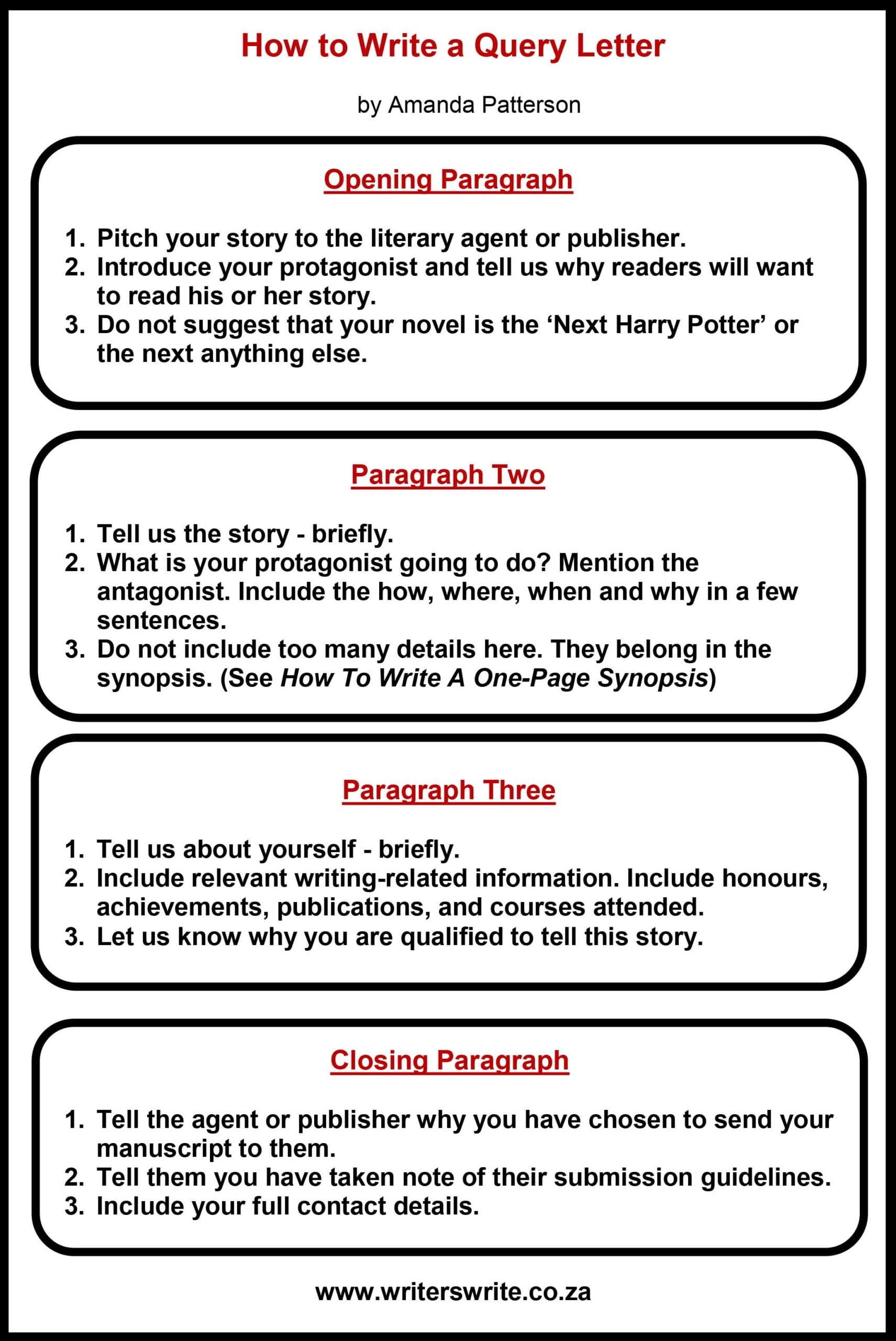
Three Examples Of Query Letters Using Our Writers Write Template
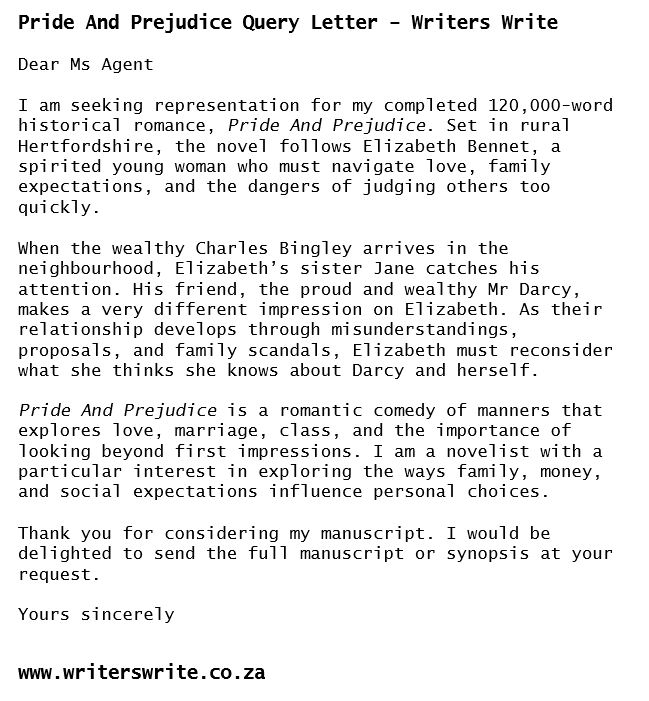
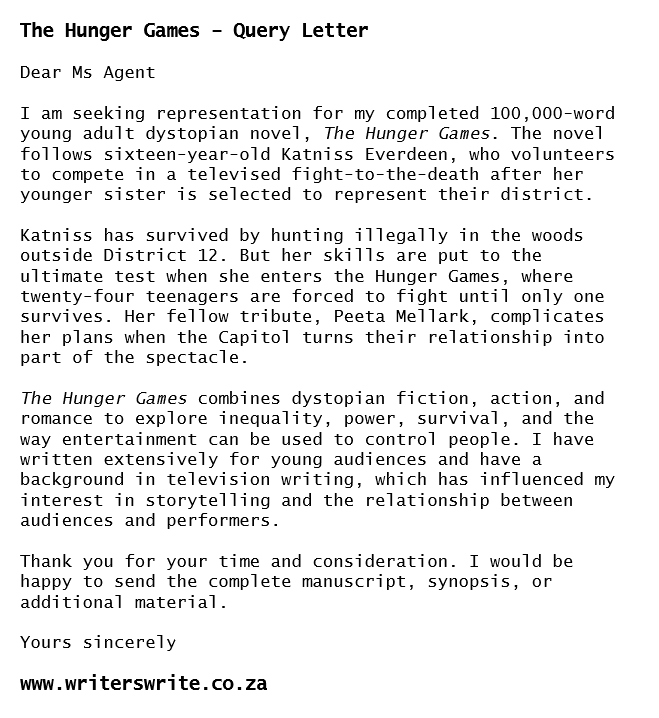
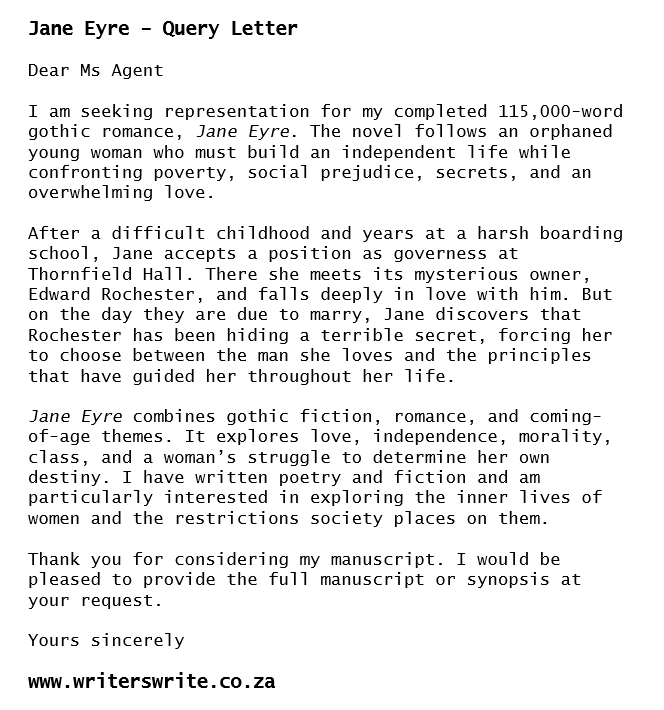
To show you how a query letter works, we have used three well-known novels (as used in our synopsis post) as examples: Pride And Prejudice by Jane Austen, The Hunger Games by Suzanne Collins, and Jane Eyre by Charlotte Brontë. Each novel has a different protagonist, genre, and central conflict, which makes them useful examples.
In each query letter, we introduce the novel, establish the main character and conflict, and give the agent a reason to keep reading. We also include the genre, word count, and a brief author introduction, before ending with a professional request for the agent to consider the manuscript.
These examples are fictional query letters written as if these authors were seeking representation today. They are designed to show you how you can use the template to create a concise query letter that introduces your story, highlights what makes it interesting, and gives a literary agent a reason to ask for more.
Example 1: Pride And Prejudice
Example 2: The Hunger Games
Example 3: Jane Eyre
Five important things to remember about a query letter:
- A query letter should be no longer than one or two pages, including the address, and the greetings.
- Use the same 12 point font you have used in your manuscript and synopsis. Look for the font you should use on the submission guidelines page.
- It should be addressed to the correct agent or publisher. Make sure you spell names correctly.
- Your query letter should be error-free.
- Write a focused, professional, realistic letter.
The Last Word
A query letter is your chance to make a strong first impression. Keep it focused, professional, and engaging, and give the agent a clear reason to want to read your manuscript. Use our 12-step template to help you organise your ideas, introduce your story, and show why your book is worth reading. Remember, your query letter does not have to tell the whole story. Its job is to make the agent want to read more.

by Amanda Patterson
© Amanda Patterson
More posts from Amanda:
- 5 Essential Exercises For Creating Characters
- 7 Reasons Introverts Make Great Writers
- What Is Anger? 37 Ways To Write About Anger
- How To Write A One-Page Synopsis (With Examples)
- 9 Ways To Set Up A Believable Fictional Breakup
- 3 Ways Sidekicks Strengthen Your Novel
- Have You Chosen The Wrong Character As A Protagonist?
- Does Your Character Fight, Freeze, Flee, Or Fawn?
- 30 Character Motivations To Kickstart Your Story
- 5 Instances When You Need To Tell (Not Show) In Your Writing
Top Tip: Sign up for our free daily writing links.
0 thoughts on “How To Write A Query Letter In 12 Easy Steps (With Examples)”
I asked a question about this subject at a writing conference last year and the answer I received was unsatisfactory. Perhaps I can ask it again here and get something I can use.
I understand paragraphs one and two but paragraph three is something else altogether. Exactly what can a new fiction writer put there when there is no awards, recognitions, honors, or other writing achievements? As an absolute new writer I have nothing, not even education as my formal training and professional background have little to do with fiction writing.
Where does one begin? How?
What we mean by ‘qualified’ does not only include the things mentioned in point 2. Include your passion for writing, your love of reading books in the genre, and why you chose to write the book. You don’t have to go overboard. Keep it simple.
Excellent post, Amanda! What would have been even better is, if you could have given the link to a couple of sample query letters. Just saying! 🙂