
Create complex, believable narcissists with practical examples, writing exercises, and prompts to bring their darker traits to life.
When Ego Turns Ugly
Let’s be honest. The term ‘narcissist’ has become over-used, a catch-all phrase for any selfish behaviour.
Yes, we can all be selfish at times. A careless remark that hurts a spouse’s feelings. Putting too much pressure on a colleague. Wanting only the best for our children at school.
But these behaviours pale in comparison to the narcissist. The true narcissist has taken the art of self-obsession to the next level.
These people seldom show empathy, shame, or regret. They don’t consider anyone’s feelings – only their own. Often this can make them difficult to live with. Sometimes, this type of disorder makes them downright dangerous.
While a sense of self-importance is healthy, the narcissist suffers from delusions of grandeur. Often, they experience fantasies of fame and glory. They want to be admired for perceived talents or good looks.
They are masters at manipulating and exploiting others. They create anything from financial ruin to sexual devastation.
Suggested reading: Use These 7 Gaslighting Phrases To Make Your Antagonist More Manipulative
Prominent American psychiatrist Dr James F. Masterson once wrote that, for the narcissist, other people exist only the way a hamburger exists for them – to make them feel good. They may charm you and manipulate you to see how wonderful they are, he said, but as soon as they get your admiration, they’ll drop you.
We find these ‘garden variety’ narcissists in real life. In fiction, however, they have to be a little more over the top. Not only must they be extraordinary, but they must also match the theme or genre of your book or script.
Iconic Narcissists
- Think of the character Patrick Bateman in American Psycho. The handsome young Wall Street broker’s pursuit of violence, sex, and excess becomes a dark metaphor for materialism and consumer culture. In other words, author Bret Easton Ellis argues that our culture celebrates and promotes the narcissist.
- The cruel, controlling Ingrid in White Oleander by Janet Fitch is a manipulative mother who uses her child as an extension of herself, regardless of the emotional damage she causes.
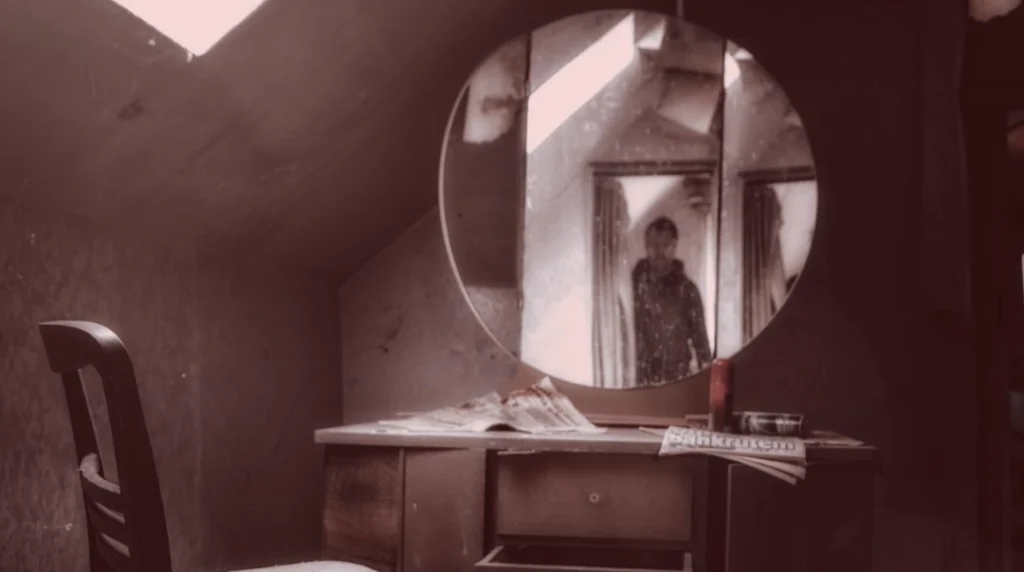
- What would you do differently if you knew there was no consequence? This is the powerful premise of a classic novel. In The Picture of Dorian Gray, Oscar Wilde creates a character who remains ageless while his portrait withers in an attic. He uses this ‘device’ to allow the main character to act out his pleasures and indulgences – even murder – with immunity The portrait in the attic is a convenient scapegoat.
- The camp and vainglorious Gaston in Disney’s Beauty and the Beast adds a dash of humour to the story. He is narcissistic, self-centered, and superficial, and motivated by extreme jealousy.
- The miserable, domineering, self-centred mother, Violet in August: Osage County by Tracy Letts, is a character many adult children can relate to.
7 Types of Narcissists To Use In Your Next Story
As a writer, adding a narcissist to your story can be irresistible. If you’re looking to create an unforgettable antagonist, try one of these seven character types.
1. A Smooth Criminal
The criminal narcissist is a fascinating character. How do you get inside their head – and see the world from their viewpoint? Their lack of conscience makes them perfect for the role of ‘baddie’.
It could be the rapist who sees his victim as an object there to experience their power. An ice-cold and remorseless assassin. A feared and notorious mafia member. Or a possessive husband who kills his spouse in a rage – and then covers his tracks.
Example: Hit man Vincent in Pulp Fiction, whose manic-slash-comic sense of self-absorption makes his actions seem even more violent.
2. What Lies Beneath
The covert narcissist hides in the shadow. This character uses stealth and cunning to manipulate people and events.
On the surface, they appear quite ‘normal’. In fact, they can be charming and successful, or appear to be shy and sensitive. But soon their passive-aggressive nature comes through. Highly sensitive to criticism, they tend to hold a grudge.
Example: The mayor in Gary Devon’s psychological and erotic thriller Bad Desire. This married narcissist lives a secret life at odds with his public image. It includes an obsession with a beautiful teenage school girl.
3. Mommy Dearest
The danger of the narcissist doesn’t have to be a stranger or romantic interest. The narcissistic parent is another character worth exploring.
The narcissistic mother, father, or caregiver is a dominant character in the fictional family. Often this character will have no boundaries when it comes to their children. They see them as extensions of their own personality. Sometimes they will use words as weapons in cruel warfare.
Example: Josephine in Mother Mother by Koren Zailckas. A matriarch’s cheerful exterior hides a dark narcissist. She is determined to control the narrative of her daughter’s life. She even turns the family home into a prison.
Read: 9 Narcissistic Mothers & How To Write About Them
4. Child’s Play
Evil or unbalanced kids make for great stories. As children we must learn to separate from our parents and forge independence. The narcissistic child doesn’t do this. They will cling to their parents at all costs.
Often they can be the golden, adored only child – or an adopted child who has been placed on a pedestal. In fact, the parents themselves may be narcissists.
Example: In Yukio Mishima’s The Sailor Who Fell From Grace With The Sea, a boy becomes so possessive of his single mother, he manipulates a gang of friends into killing her new lover.
5. Romeo Stalks Juliet
Say hello to the romantic narcissist. The character suffers from the Don Juan syndrome – a man who must conquer many lovers to validate his worth. This type of narcissist can be any gender or sexuality. Their traits may show in emotional manipulation or physical abuse. They are masterful at deception – and will often try to gaslight their partner.
Example: Joe Goldberg in You by Caroline Kepnes. This seemingly romantic hero invisibly and cunningly takes over the main character’s life – often making life and death decisions.
Read more in 5 Ways To Write About Stalkers
6. Horrible Bosses
The narcissistic boss or leader is often overlooked in storytelling. However, most of us spend eight hours a day in the workplace – so there is opportunity to create a nasty manager or power-mad CEO.
The character can be a misogynistic man or a megalomaniac. In short, they will use their authority to subtly torture their underlings. In some cases, they use their power, charm and success to seduce an employee.
Example: Miranda Priestly in The Devil Wears Prada by Lauren Weisberger. The editor of a glossy magazine tortures as much as she nurtures the young interns that stray into her Faustian trap.
7. Famous & Dangerous
The celebrity or fame-hungry narcissist is a great character to explore. Whether they work in film or music, politics or sport, this character feels a strong sense of self-importance and entitlement.
The danger is that they are shielded from the consequences of their selfish behaviour – by legal muscle or real muscle in the form of a bodyguard. They may also use social media to cultivate their image and seek constant admiration.
Example: The radical preacher TJ Luther in Thomas Thompson’s novel, Celebrity. A petty criminal and womaniser, he transforms himself into a white-suited Southern messiah for the masses.
Dangerous Duos
Sometimes the narcissist doesn’t act alone and teams up with another character who is equally self-absorbed and dangerous. When two narcissistic characters reinforce each other’s sense of superiority, their partnership can become particularly dangerous.
In the movie, Rope, Alfred Hitchcock took the real-life case of Leopold and Loeb to tell the story of two students who conspire to commit the perfect crime. Similarly, in the 2018 short film Pimped, two misogynistic friends play cruel games with the girls they meet in bars.
Try These Exercises
Here are five exercises to help you explore the narcissistic types discussed.
- Find a picture of Caravaggio’s Narcissus, about the man who falls in love with his own reflection. Write an interior monologue for the figure in this iconic painting.
- Write about a character who is obsessed with their appearance. Describe how they will use plastic surgery to achieve this sense of perfection. Write in the first or second person.
- Create a scene from a screenplay where a narcissistic movie star walks into a Hollywood party held in their honour. Remember to include dialogue.
- Write about a parent who punishes their child for not being perfect.
- Create the backstory for a narcissistic criminal character – include trauma or a pivotal incident from their childhood.
The Last Word
Narcissists can make fascinating characters. Their need for attention, control, or praise can create conflict in surprising ways. But don’t stop at the label. Think about what your character wants, what they fear, and what drives their behaviour. Use these character types, examples, exercises, and prompts as a starting point. Then add depth, flaws, and contradictions to make your narcissist feel like a real person.

Anthony Ehlers facilitates courses for Writers Write. He writes awesome blog posts and workbooks too.
More Posts From Anthony:
- The MacGuffin And Chekhov’s Gun: 2 Literary Devices Writers Should Know
- What Is Visual Storytelling? 10 Essential Techniques Every Writer Should Know
- 7 Ways ‘What If?’ Helps Writers Create Better Stories
- 5 Secret Tricks To Strengthen Your Writing
- 5 Famous Writers On Writing A Villain
- 7 Deadly Rules For Creating A Villain
- How To Write The Tragic Love Story – A 10-Step Formula
- 6 Fascinating Fictional Character Types
- 7 Spine-Chilling Tips For Writing An Unforgettable Horror Story
- The Moment Of Change In Fiction
Top Tip: Sign up for our free daily writing links.
1 thought on “7 Types Of Narcissists To Use In Your Next Story”
I’d be interested in which of these categories Donald Trump would fall into. He seems to meet the criteria for all of them!
Comments are closed.