
Are you writing for a younger audience? Use our quick start guide to writing for children to help you write your stories.
Read the other posts in our Quick Start series:
- A Quick Start Guide To Creating Characters
- A Quick Start Guide To Writing Fantasy
- A Quick Start Guide For Beating Writer’s Block
- A Quick Start Guide To Writing For Children
- A Quick Start Guide To Writing YA Fiction
- A Quick Start Guide To Writing A Memoir
- A Quick Start Guide To Writing Descriptions
- A Quick Start Guide To Writing Romance
- A Quick Start Guide To Writing Science Fiction
- A Quick Start Guide To Foreshadowing
- A Quick Start Guide To Writing An Inciting Incident
- A Quick Start Guide To Writing Dialogue
- A Quick Start Guide To Writing Crime Fiction
- A Quick Start Guide To Writing Emotions
- A Quick Start Guide To Writing Revenge
- A Quick Start Guide To Writing First & Last Lines
A Quick Start Guide To Writing For Children
Many writers are under the misconception that is easier to write for children than it is to write for adults. This isn’t true. Writing for children is fun, probably the most fun you can have while you are writing, but it is not easy. There is a lot to consider when you want to keep the kiddos engaged.
TOP TIP: If you want to learn how to write for children, sign up for kids etc. online
Let’s Take A Look
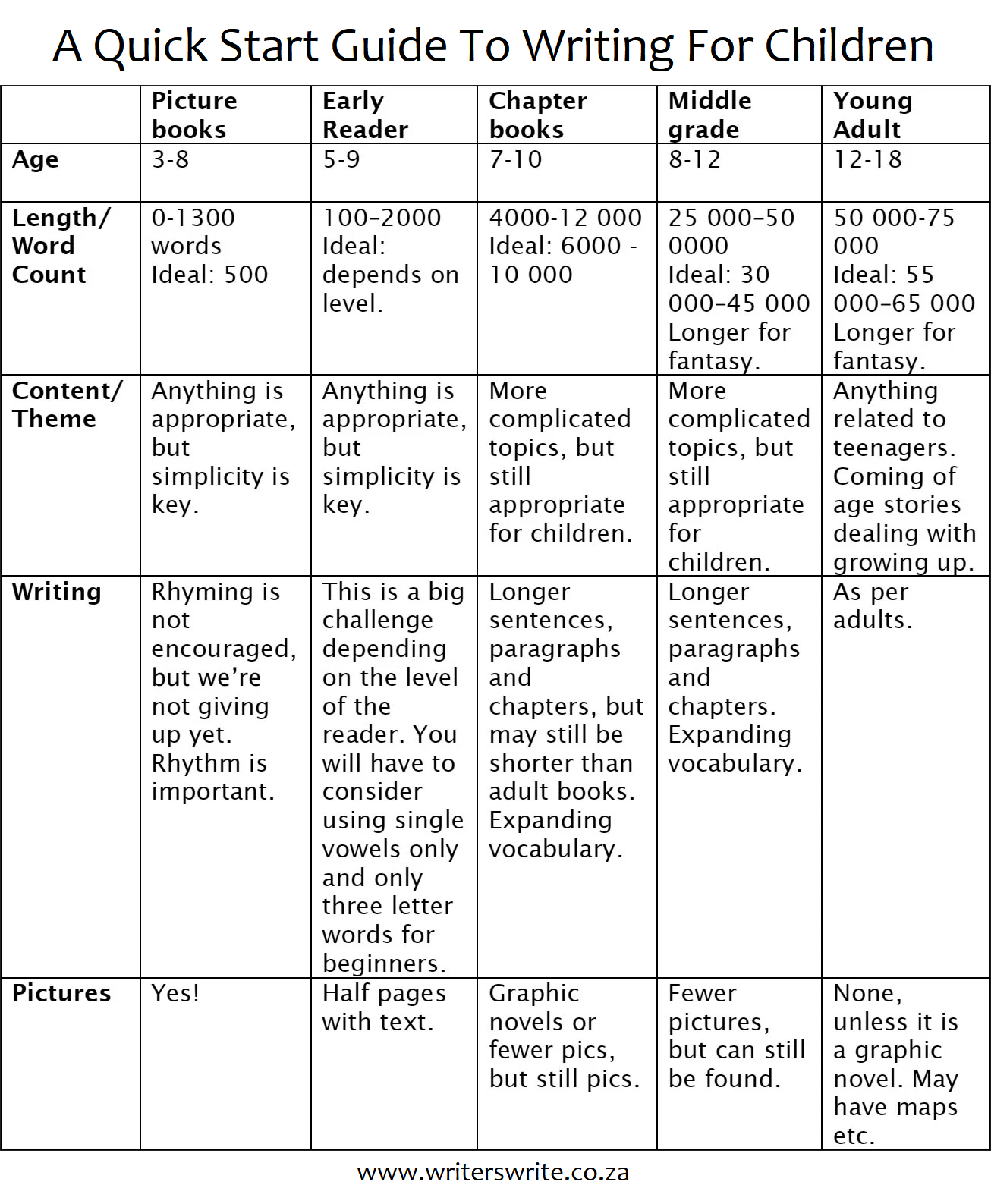
Children’s literature is a huge category with many subdivisions. To know what you have to do or what is required of you, you have to know who you are writing for.
Everything depends on the age of the reader and there is overlap and wiggle room, but as a beginner writer you’ll have to follow industry guidelines as far as possible, but when you are famous you can get away with more.
Notes:
- I have excluded non-fiction and board books.
- You’ll notice that the age groups overlap. This depends on the child and how well they can read.
- I’ve used the term ‘appropriate for children’, but of course that is very subjective. Captain Underpants and Harry Potter are frequently challenged titles.
- Children read for the same reasons that adults do. They also read for fun and entertainment. Stop trying to preach to them. Add a theme or a lesson but have fun with it. Teach them without wagging your finger.
- Do your research. Find out exactly what an agent or publisher wants and work to their guidelines.
Creating Characters For Children’s Books
If you want help with this, please read these posts:
- Everything You Need To Know About Creating Characters For Children’s Books
- How To Develop Strong Characters Children Will Relate To
The Last Word
Writing for children is a challenge and it is incredibly rewarding. It is really about letting your imagination run wild within some very strict confines. If you want to learn how to write for children, sign up for kids etc. online.

by Mia Botha
If you enjoyed Mia’s post, you will love:
- 15 Inspiring Reasons To Start Writing Poetry
- Worldbuilding: The Ultimate Setting Checklist For Writers
- Show Don’t Tell: 5 Simple Techniques Every Writer Should Know
- How To Show & Not Tell In Short Stories
- A Complete Guide To Writing Prompts & Daily Writing Practice
- How To Write What You Love
- 4 Point Of View Choices For Writers
- Where Does Conflict Come From In Fiction?
- Writing Competitions To Inspire You
- How To Write Epic Beginnings
Top Tip: Sign up for our free daily writing links.