
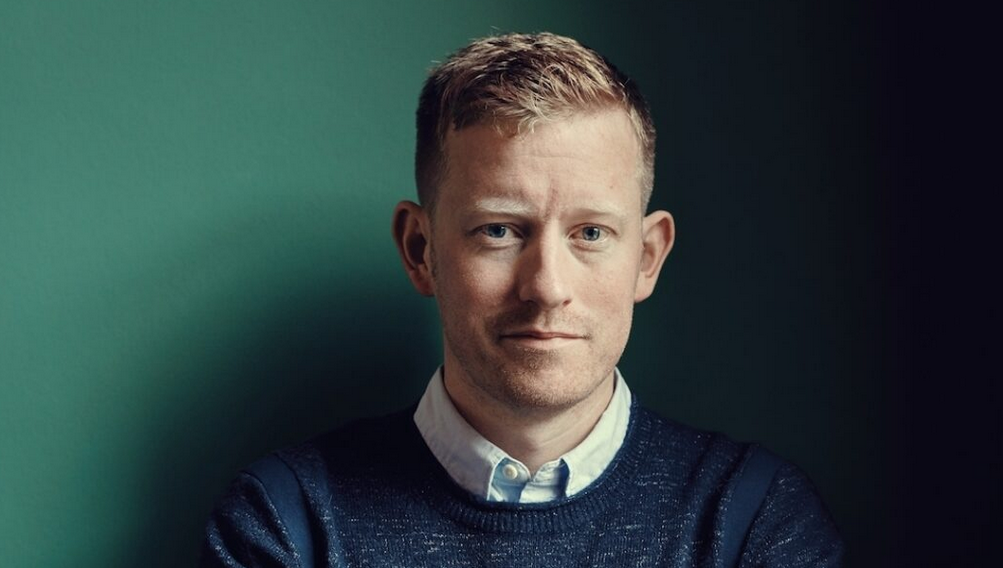
Happy Birthday, Colin Barrett, born on 26 April 1982.
Colin Barrett Quotes
- I think that’s why a lot of writers get told they should live abroad. It all comes from Joyce, I guess. Basically, you’re not there, and it sharpens your memory because you forget these things unless you consciously try to recall them. Not being around them, in a weird way, sharpens your appreciation of them. (Bomb Magazine)
- I stay away from auto-fictional stuff, or stuff that’s referential, or is about writers, or even stuff from my own life. Most of the stuff is made-up, obviously, but once in a while I get the urge to do something like it. (Bomb Magazine)
- I just followed my impulses, wherever a story took me. The great thing about stories is that I tend not to come to them with any preconceived ideas. I’ll come up with a character and a setting. That’s all I’ll start with. (Bomb Magazine)
- My first draft managed to be both over and under written, which is probably something a lot of editors find when they’re handed a first draft. All the plot points were there, all the characters were there, but some were superfluous and so I had to winnow them down. (Hazlit)
- It doesn’t matter if sequences are good or bad. Is it entertaining or not? Are they pertinent or not? Do they move the plot forward or not? And do they make things clearer as opposed to being digressive or going off on little side trips that may not have been necessary? (Hazlit)
- So much of writing a novel is just trying to have a degree of flexibility in the perspective, so it’s very important who your framing characters are. It took me until the second draft to figure out who that needed to be exactly. (Hazlit)
- In my very earliest stories, a lot of the stories in Young Skins and several in Homesickness, there was a sort of unalloyed pleasure in language, you know? I got so much pleasure out of finding a register, moving between slightly more elevated language and then the more earthy and vernacular, throwing in local idioms, and then not being afraid to throw in your ten-dollar polysyllables as well. Sometimes stories can just be a language event. (Hazlit)
- I’d wanted to be a writer for a while – though it was always a very abstract notion, essentially a daydream – but when I read Kevin Barry’s first collection of short stories, There Are Little Kingdoms, I discovered a writer writing about a world I recognised, and doing it with vivid abandon and assuredness. It gave me inspiration, permission almost, to write about the world I knew. (The Booker Prize)
- A book that came along for me just when I needed it was Elizabeth Strout’s Olive Kitteridge. It’s a brilliant novel and very strange – in the angles of its approach, the way it hovers in a state of agonised reticence above Olive, its ostensible main character, who, like all my favourite characters, becomes more of a mystery the more we discover about her. (The Booker Prize)
- I have mainly written at a kitchen table. I used to be a night owl and stay up late and write but now it’s just not feasible with the school run every morning. Once I’ve dropped off the children, I start writing as soon as possible and then pick up momentum. (The Gloss)
- It’s wonderful to get the recognition but it’s not the be-all and end-all. Don’t take your eye off the ball. With each book, I’ve done the best I can. In the most meaningful sense, that is the biggest success. (The Gloss)
- When I was finishing Wild Houses I would go to the library in Toronto for an hour or two. There’s something about people around you doing their work that disciplines you to not faff around. (The Gloss)
- I was not observant at all. I’m still not now. My wife is astonished that I’m able to write. When she reads my work, she’s like, “You pay such attention to things, but you don’t in real life.” (The Guardian)
- [I write] Generally here [at the dining-room table], and whenever I can, when the kids are out of the house. I can have some music on in the background or whatever, that’s fine. Having a couple of kids helps you realise that you can write where you like, as long as they’re not jumping on your head. (The Guardian)
Colin Barrett is an award-winning Irish Canadian writer of literary fiction. Barrett studied at University College, Dublin, and was awarded a BA degree in English; an MA in Creative Writing; and an MFA in Creative Writing. In 2013, he published Young Skins, a cycle of seven stories set in the fictional town of Glanbeigh, County Mayo. ‘Bait’ and ‘The Clancy Kid’, both of which were published in Young Skins, were made into plays in Dublin in 2017. Another of the stories in the book, ‘Calm with Horses’, was adapted into an award-winning 2019 film. Barrett received multiple awards for Young Skins. These included the Frank O’Connor International Short Story Award, the Guardian First Book Award, and the Rooney Prize for Irish Literature in 2014. Barrett followed the success of his first short story collection with a second, Homesickness, in 2022. Its eight stories were also met with critical acclaim. Barrett’s first novel, Wild Houses, was longlisted for the 2024 Booker Prize. It was also the winner of the Nero debut fiction award. It follows two outsiders caught in the crosshairs of a small-town revenge kidnapping gone wrong. Some of his inspirations include Flannery O’Connor and Denis Johnson. Follow him on Instagram and X.
Source for image: Penguin Random House Credit: Rolex Anoush Abrar

Are you interested in more authors’ birthdays? Please click here: Literary Birthday Calendar