
Want to write a memoir? Discover 5 practical tips to help you get started and turn your memories into a compelling story.
You need to do three important things before you write your memoir.
In this post, I want to deal with the first point. I want to make suggestions on how you can research your memoir. This is hard work and takes time but once you’ve done it, you will have an invaluable resource.
I want you to think about how you can jog your memories and collect information so that you can stay as true to your story as possible.
The 5 Top Tips For Turning Memories Into A Memoir
1. Become A Gatherer.
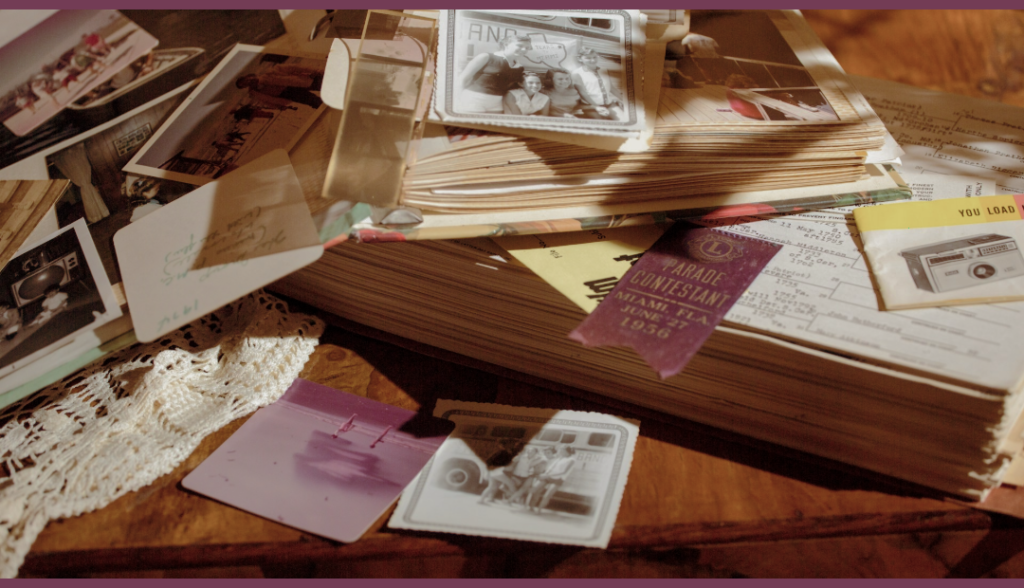
You should start with personal bits and pieces. Remember that these are only aids. Your memories are still there, and you can access them with or without these items. These are the types of things to look for and keep:
- Diaries
- Obituaries
- Birth, marriage, death certificates
- Birthday and wedding invitations
- Letters
- Photographs
- Home movies, videos, and DVDs
- Report cards, school books
- Family memorabilia
- Jewellery
- Menus
- Music – vinyl, tape, digital
- Newspaper cuttings
- Old cheques
- Old theatre programmes
- Payslips
- Wills
- Emails and text messages
- Social media posts and comments
- Digital photographs and videos
- Voice notes and audio recordings
- Blogs and websites
- Digital calendars and diaries
- Travel records and location history
- Old mobile phones, computers, and hard drives
2. Make Use Of Living Relatives And Old Friends.
Start a conversation about your memoir. Remember that neither you nor your relative or friend is ‘right’ or ‘wrong’. You each have your own story to tell. Listen. You will need other voices in your memoir. You will specifically need voices that oppose yours. Make notes.
3. Ground Your Story Using Details From The Time You’re Describing.
If you don’t do this, you run the risk of spending too much time meandering through your thoughts and feelings. Visit the places you will be describing. If you are unable to go back, there are other ways to do this. You can:
- Watch movies and television programmes from that era.
- Read newspapers from the years you will be writing about.
- Search online archives for dates, places, and incidents.
- Look at old photographs and videos, including their dates and locations.
- Search your emails, messages, and social media accounts for details you may have forgotten.
- Use digital maps and street views to revisit places that have changed.
4. Prepare A Life List.
This is for you and you alone. This is not for a publisher’s consumption. Write a page on each of these subjects. Some may not even be applicable to you. This list will become the skeleton from which you draw material for your memoir.
- Birth and baby years
- Pre-school years
- Junior school
- High school
- University
- Friends
- Hobbies
- Holidays, festivals
- Jobs
- Illness
- Early relationships
- Religion
- Early marriage
- Moving House
- Middle years
- Bereavement
- Later years
- Retirement
5. Make Files.
Organise your material using a lever-arch file with plastic pockets for memorabilia. Do this in chronological sequence. Slot your notes and writing between these. Now fill the plastic folders with whatever is relevant to these life stages. You should have achieved some sort of order, and you’ll be grateful for this as you progress through your memoir.
A Brief Note About Technology
Technology can help you recover details you might otherwise forget. Old messages, photographs, emails, and social media posts can bring back memories and help you establish dates. Remember that these records offer clues, not the whole story. Check details where you can, and ask for permission when using other people’s personal correspondence in your memoir.
The Last Word
Writing a memoir starts with gathering your memories and organising your material. Take the time to do your research before you begin writing. You don’t need to remember everything at once. The purpose of this preparation is to gather material you can return to as you write and shape your life story.
If you want to learn how to write a memoir, look into our Secrets of a Memoirist course.
Photo by Kirk Cameron on Unsplash

by Amanda Patterson
© Amanda Patterson
More posts from Amanda:
- How To Write A Locked-Room Mystery: The Secret To The Impossible Crime
- 10 Ways To Get Out Of A Writing Rut
- What Is A Denouement? How It Works In Fiction
- How To Name Characters: 10 Things To Consider
- How To Use The Five Senses In Your Writing
- What Is A Myth? 20 Myth-Inspired Writing Prompts
- Punctuation For Beginners: What Is Punctuation?
- What Is A Plot Twist? The Secret To Writing A Great One
If you’re looking for more posts on memoirs, try these:
- What’s The Difference Between An Autobiography And A Memoir?
- 12 Types Of Memoirs – Which One Is Yours?
- Why You Need To Write Your Memoir Like Fiction
Top Tip: Sign up for our free daily writing links.
0 thoughts on “The 5 Top Tips For Turning Memories Into A Memoir”
I am surely seeking an outlet for my writing. Many of my most recent attempts have led to disastrous dead ends.
I use a program(me) called Personal Historian. It asks all these questions and more, with subsidiary memory-ticklers in each, interspersed with news timelines. Each of these that apply to you can generate a separate, personal document, and you can compile all or some of these into a larger document or even a book. I’m a genealogist, not a memoirist, but it turns out that I’m compiling a memoir, bit by bit, as things come to mind.
This is an excellent article. In the last four years plus I have been writing a collection of memories through my life and of stories obtained by my parents, grandparents and others in the family. I am close to having about 1500 0pages of notes. Thank you for sharing this list. I am about ready to organize my book as I write.
The timing of this article could not have come at a better time! A small incident recently made me think of writing a memoir in addition to my other writing.