
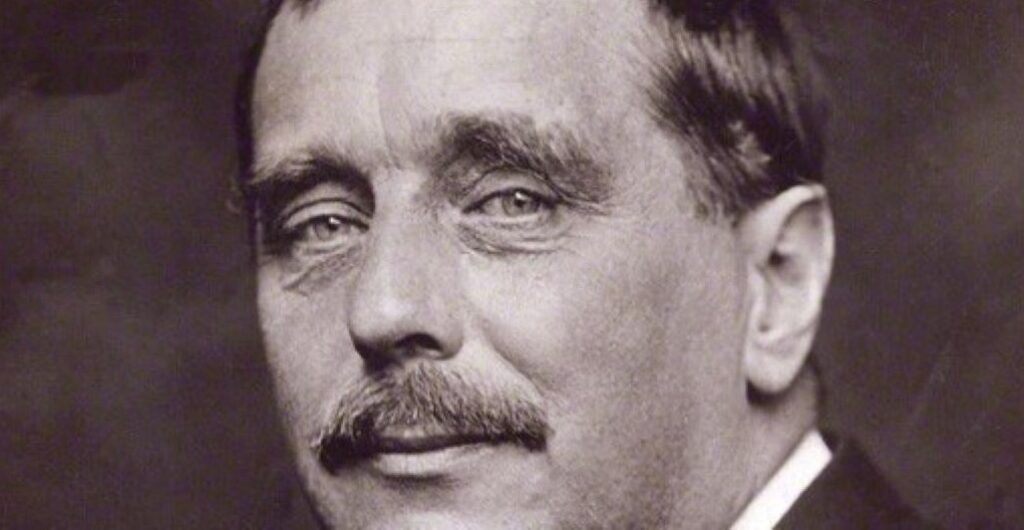
H. G. Wells was born on 21 September 1866 and died on 13 August 1946.
H. G. Wells Quotes
Read the opening lines of The War of the Worlds
- Nothing leads so straight to futility as literary ambitions without systematic knowledge.
- No passion in the world is equal to the passion to alter someone else’s draft.
- Human history becomes more and more a race between education and catastrophe.
- Moral indignation is jealousy with a halo.
- If you are in difficulties with a book, try the element of surprise: attack it at an hour when it isn’t expecting it.
- Our true nationality is mankind.
- So many promising girls allowed themselves to be submerged altogether in marriage for a time, and when they emerged everyone had forgotten the promise of their début.
- Advertising is legalised lying.
- We must not allow the clock and the calendar to blind us to the fact that each moment of life is a miracle and mystery.
- If we don’t end war, war will end us.
- It is not reasonable that those who gamble with men’s lives should not pay with their own.
- I write as straight as I can, just as I walk as straight as I can, because that is the best way to get there. (from Experiment in Autobiography)
Read: 7 Bits Of Writing Advice From H. G. Wells
H. G. Wells was an English writer best known for pioneering speculative fiction and science fiction. He also wrote contemporary novels, history, politics, social commentary, textbooks, and works on war games. His wide-ranging career made him an important literary and social commentator of his time. Wells’s early scientific training influenced his fiction, which used imaginative ideas to explore social and political issues. His most famous dystopian and science-fiction novels include The War of the Worlds

Source for Image: George Charles Beresford, Public domain, via Wikimedia Commons
https://commons.wikimedia.org/wiki/File:H.G._Wells_by_Beresford.jpg

by Amanda Patterson
Are you interested in more authors’ birthdays? Please click here: The Complete Author Birthday Calendar