
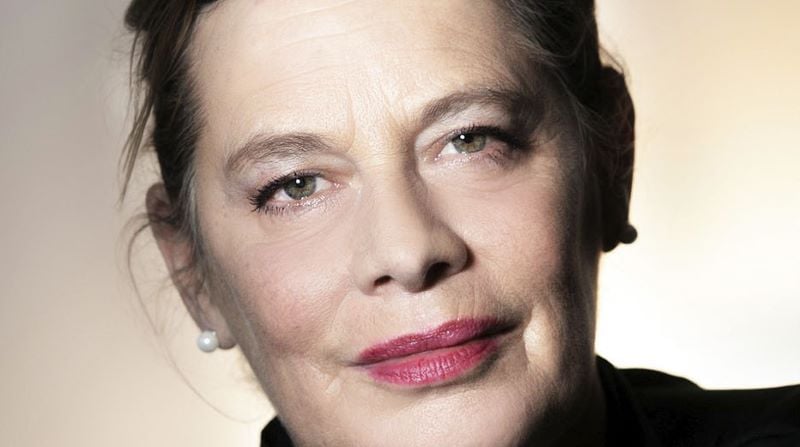
Happy Birthday, Deborah Levy, born on 6 August 1959.
Deborah Levy Quotes
- In novels, characters are my avatars, right? They argue for me and embody my thoughts. But in the living autobiographies – which is just a term I made up – the challenge was not to take a fixed position on my opinions of life, but have a whole lot of things coexist together: rage, strength, vulnerability, humour, confusion, clarity.
- It would be really sad to be very bad at living. I don’t want to make a claim on what it means for anyone else, but for me it’s about human attachment, being able to live warmly with each other. It’s about breaking bread with strangers around the table. It’s about finding a way of living that feels more right than wrong; not necessarily having to live the societal script that has been written for any of us.
- I discovered something about chronology, which is that most conventional autobiographical writing starts with childhood. But I realised that I didn’t have to start there. I wanted to shake that sort of dusty notion of autobiographical writing.
- When I’m writing a novel, I am totally obsessed with the novel – how to reach my ideas and how it will unfold from start to finish. I am not thinking of film. However, cinema is one of my main influences. In all my books there are the literary equivalents of close-ups, long shots, jump cuts, aerial views. If I am attentive to the mood of a particular scene in a novel, it’s likely that a film will use lighting and music to create that mood. I have to get there with sentences and paragraphs. When writing a novel, the author is the director and the camera and the lighting designer.
- The funny thing is that all the scenes I think are particularly visual and filmic mostly don’t make their way into a film. That’s because film, quite rightly, is not going to tell the story in the same way as the novel. It’s not even going to take much dialogue from the novel.
- Film is a visual form, so the story is going to be told in images, maybe with very little dialogue. What really matters in every form is the complexity of human problems – what do the characters want and what is stopping them from getting it?
- So, at the start of the run of a play, I am still deleting lines and maybe tweaking a scene. By the time I have submitted a novel to my publisher, I have done all that work. A writer is also a reader. I am the first reader of all my books and, in a way, I am its most critical audience.
- I like a calm and private place to write, wherever it is. Many of my books were written in a humble writing shed. I do like looking out at something, not exactly at what is often called ‘a view’, no, something more particular, so maybe a point of view – a roof top, a tree, a road.
- I knew very young that I wanted to write. Back in South Africa I was told to write down my thoughts when I didn’t speak up enough as a child in convent school. That was very exciting to me, that you can actually write your thoughts. I discovered that my thoughts were quite loud.
- Most of my recent books are meticulously planned. I don’t think meticulous is quite the right word actually: they are planned. What I like to do when I begin is have the beginning, and the end, … and it just interests me enough to start.
- I don’t keep offcuts when I’m writing fiction. I don’t recommend anyone try this at home, and I would never recommend it to my students, but somehow it’s an added thrill of writing, to lose a whole page of writing. Even if there is a good paragraph in that page, I just let it go. And sometimes it works, most of the time it works, because I feel I have to start again, and re-find it, or find something else.
- I used to write better early in the morning. If I had it my way I would be up at 4 a.m., and I would write until 2 p.m., and then that would be the end of the writing day. Mornings are so soft, and everything’s still, everything’s quiet, nothing’s really begun early in the morning. They suit me.
Source for quotes 1-3: Penguin and 4-8: The Booker Prizes and 9-12: The White Review
Deborah Levy is a South African novelist, playwright, and poet. She began her career writing for the theatre, with plays staged by the Royal Shakespeare Company, before turning to fiction. Her early novels include Beautiful Mutants, Swallowing Geography, and Billy & Girl. She later gained international acclaim with the Booker Prize-shortlisted novels Swimming Home and Hot Milk, the Booker Prize-longlisted The Man Who Saw Everything, and the short story collection Black Vodka. Levy has also written the acclaimed memoir trilogy: Things I Don’t Want to Know, The Cost of Living, and Real Estate. Levy has said that the heart of both writing and living lies in the many ways we negotiate with reality. In 2017, she was elected a Fellow of the Royal Society of Literature. She has been shortlisted twice for both the Booker Prize and the Goldsmiths Prize, and won the Prix Femina étranger.
Source for photograph: Penguin

by Amanda Patterson
Are you interested in more authors’ birthdays? Please click here: The Complete Author Birthday Calendar