
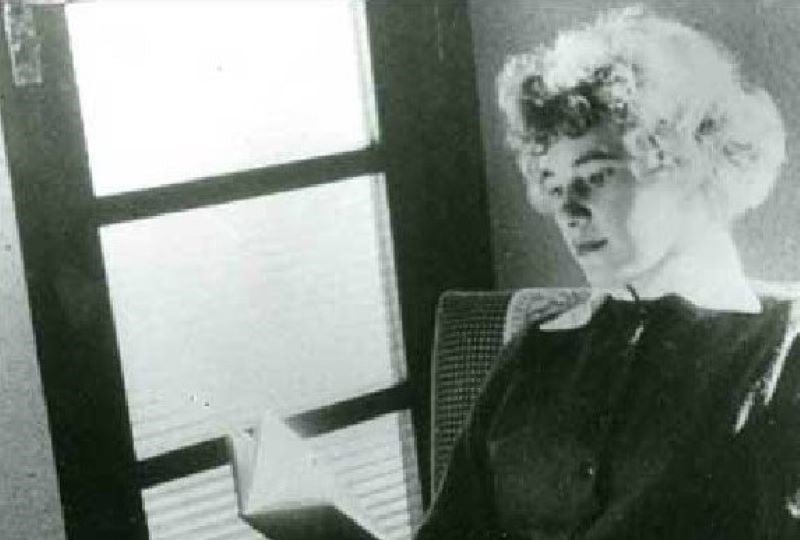
Ingrid Jonker was born on 19 September 1933 and died on 19 July 1965.
One of Ingrid Jonker’s most famous poems, The Child, was written after the 1960 Sharpeville Massacre. President Nelson Mandela read it during the opening of South Africa’s first democratic Parliament, in May 1994.
'The Child' by Ingrid Jonker

The child is not dead
The child lifts his fists against his mother
Who shouts Afrika! shouts the breath
Of freedom and the veld
In the locations of the cordoned heart

The child lifts his fists against his father
in the march of the generations
who shouts Afrika ! shout the breath
of righteousness and blood
in the streets of his embattled pride

The child is not dead
not at Langa nor at Nyanga
not at Orlando nor at Sharpeville
nor at the police station at Philippi
where he lies with a bullet through his brain

The child is the dark shadow of the soldiers
on guard with rifles Saracens and batons
the child is present at all assemblies and law-givings
the child peers through the windows of houses and into the hearts
of mothers
this child who just wanted to play in the sun at Nyanga is everywhere
the child grown to a man treks through all Africa
the child grown into a giant journeys through the whole world

Without a pass
'The face of love' by Ingrid Jonker

Your face is the face of all the others
before you and after you and
your eyes calm as a blue
dawn breaking time on time
herdsman of the clouds
sentinel of white iridescent beauty
the landscape of your contesses mouth
that I have explored
keeps the secret of a smile
like small white villages beyond the
mountains
and your heartbeats the measure of
their ecstasy
There is no question of beginning
there is no question of possession
there is no question of death
face of my beloved
the face of love
Quote: ‘I know there are other things in life apart from love, but one has to have a basis to go out from. Without it, my whole wretched past lifts its dreadful head, and looks at me with that sad and wasted look which paralyses me with terror.’
Ingrid Jonker was a South African poet whose work became an important part of South African literature. She began writing at an early age, and her first known collection of poems, Na die Somer (After the Summer), was compiled in 1946, when she was just 13. Jonker published several collections during her lifetime and became known for her sensitive, lyrical poetry. Her work often reflected personal experience as well as the social and political realities of South Africa. She is sometimes called the ‘South African Sylvia Plath’ because of the intensity of her poetry and the tragic circumstances of her life. Jonker had relationships with the South African writers Jack Cope and Andre Brink. Brink later translated some of her poems for the English-language collection Black Butterflies (Selected Poems)
Source for Image: Unknown author, Public domain, via Wikimedia Commons
https://commons.wikimedia.org/wiki/File:Ingrid_Jonker_1956.jpg

by Amanda Patterson
Are you interested in more authors’ birthdays? Please click here: The Complete Author Birthday Calendar