
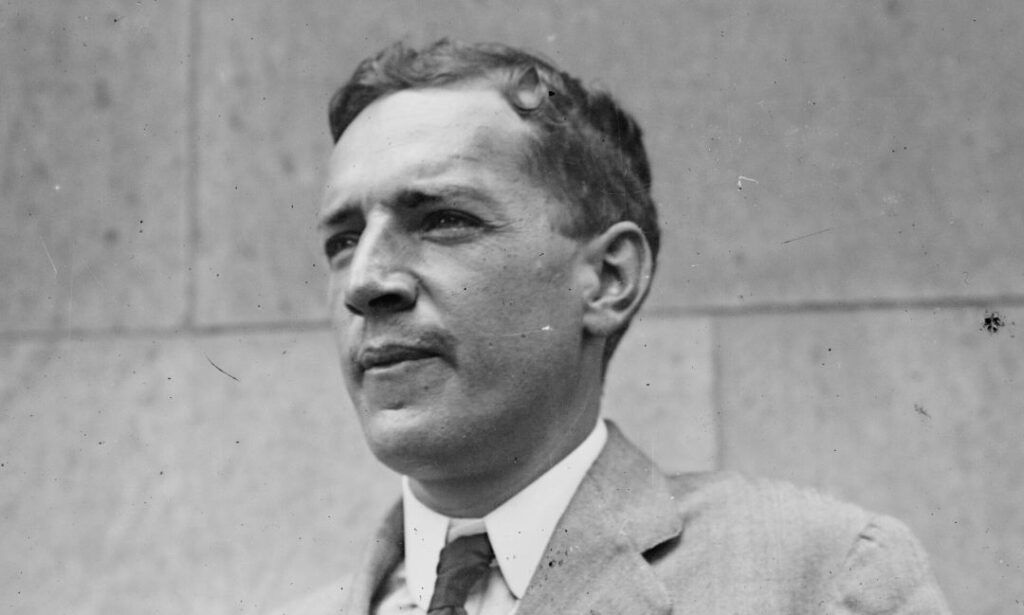
Upton Sinclair was born on 20 September 1878 and died on 25 November 1968.
Upton Sinclair Quotes
- I aimed at the public’s heart, and by accident I hit it in the stomach.
- I wrote with tears and anguish, pouring into the pages all that pain which life had meant to me. Externally the story had to do with a family of stockyard workers, but internally it was the story of my own family. Did I wish to know how the poor suffered in winter time in Chicago? I only had to recall the previous winter in the cabin, when we had only cotton blankets, and had rags on top of us. It was the same with hunger, with illness, with fear. Our little boy was down with pneumonia that winter, and nearly died, and the grief of that went into the book.
- Fascism is capitalism plus murder.
- I intend to do what little one man can do to awaken the public conscience, and in the meantime I am not frightened by your menaces.
- All art is propaganda. It is universally and inescapably propaganda; sometimes unconsciously, but often deliberately, propaganda.
- It is foolish to be convinced without evidence, but it is equally foolish to refuse to be convinced by real evidence.
- One of the necessary accompaniments of capitalism in a democracy is political corruption.
- Pessimism is mental disease. It means illness in the person who voices it, and in the society which produces that person.
- But the devil is a subtle worm; he does not give up at one defeat, for he knows human nature, and the strength of the forces which battle for him.
Upton Sinclair was an American author who wrote nearly 100 books across a wide range of genres. Although best known as a novelist, he was also a journalist and social reformer who used his writing to expose economic inequality, unsafe working conditions, and corporate corruption. Sinclair became one of the leading writers of the Progressive Era’s muckraking movement. His 1906 novel The Jungle exposed the appalling conditions in the US meat-packing industry and caused a public outcry. He later turned his attention to the press in The Brass Check: A Study of American Journalism, which examined the limitations and influence of the American press. Sinclair reached another wide audience with his 11-volume Lanny Budd series of contemporary historical novels, beginning with World’s End in 1940. The series follows Lanny Budd, an antifascist protagonist who witnesses major events surrounding the Second World War. Sinclair won the Pulitzer Prize for Fiction in 1943 for the third novel, Dragon’s Teeth. His memoir, The Autobiography of Upton Sinclair, was published in 1962. Sinclair’s extensive body of work combined fiction, journalism, political commentary, and social criticism.
Source for image: Bain News Service, publisher, Public domain, via Wikimedia Commons
https://commons.wikimedia.org/wiki/File:Upton_Sinclair_LCCN2014686178_cropped2.tif

by Amanda Patterson
Are you interested in more authors’ birthdays? Please click here: The Complete Author Birthday Calendar