
What Are Homophones, Homonyms, Homographs and More?
Homophones, Homonyms, Homographs and More
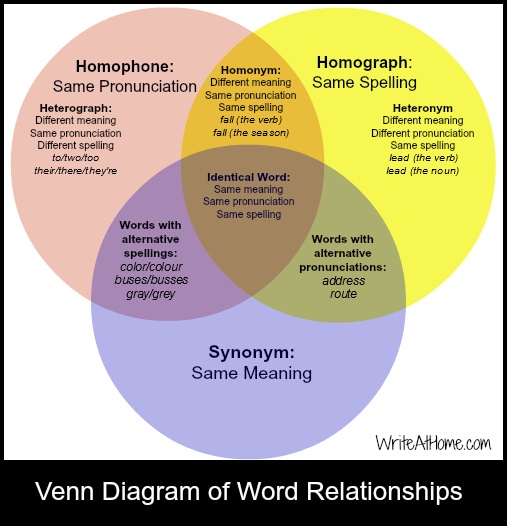
“Homonyms, homophones, and homographs describe words with shared origins (same sound or spelling) but different meanings.
- Homophones sound the same but have different meanings and spellings (e.g., to, too, two),
- homographs are spelled the same but have different meanings and sometimes different pronunciations (e.g., lead the metal vs. lead to guide),
- and homonyms are words that are either spelled the same, pronounced the same, or both, but always have different meanings.”
Homophones
They say: “Homophones are words pronounced alike but different in meaning or derivation or spelling. These words may be spelled differently from each other (such as to, too, and two), or they may be spelled the same way (as in quail meaning ‘to cower’ and quail meaning a type of bird).”
Homonyms
They say: “Homonym may be used to refer to either homophones or to homographs. Some people feel that the use of homonym should be restricted to words that are spelled alike but are different in pronunciation and meaning, such as the bow of a ship and the bow that shoots arrows.”
Homographs
They say: “Homographs are words that are spelled alike but are different in meaning or derivation or pronunciation. Sometimes these words sound different (as in the bow of a ship, and the bow that shoots arrows), and sometimes these words sound the same (as in quail meaning ‘to cower’ and quail meaning a type of bird).”
Key Differences Summarized (From AI)
- Sound: Homophones sound the same.
- Spelling: Homographs are spelled the same.
- Both: Homonyms are words that can either sound the same, be spelled the same, or both.
Source for Image